
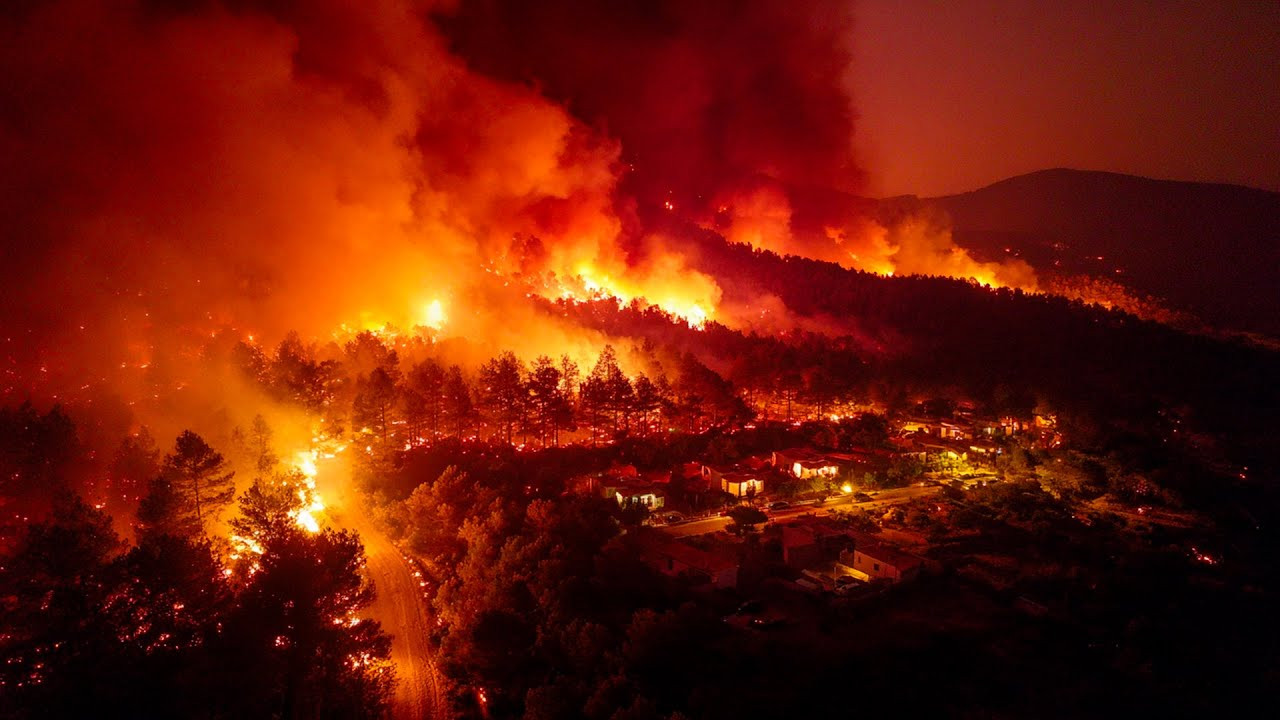
Europe is in the grip of extreme heat. In Türkiye, an all-time temperature record of 123 degrees Fahrenheit was registered, while in Greece the heat exceeded 108 degrees. The absence of rainfall and strong, gusty winds created ideal conditions for wildfires that spread rapidly across multiple regions. Many countries declared the highest level of danger, and thousands of people were evacuated.
On July 24, a forest fire broke out in Türkiye’s Eskişehir Province. A team of forest workers and rescuers was creating protective firebreaks to contain the flames, but a sudden shift in the wind turned the operation into tragedy — ten people became trapped and lost their lives. Fourteen others survived, many with burns and injuries.
On July 26, in Antalya, the fire came dangerously close to high-rise residential buildings, particularly crowded in the summer tourist season. Residents were urgently evacuated, and traffic along a key coastal highway was suspended. On July 28, the situation became critical in the Bursa region, Türkiye’s fourth most populous city: about 7,400 acres of forest were destroyed, more than 1,700 people were evacuated, and the highway to Ankara was closed. Fires also burned across the provinces of Adana, Mersin, and Karabük, while İzmir and Bilecik were officially declared disaster zones. Since the start of summer, Türkiye has recorded more than 3,000 forest fires. Around 25,000 emergency responders have been involved in suppression efforts, with at least 17 casualties reported.
In Greece, on July 26, wildfires engulfed more than 136,000 acres. On the island of Kythira, around 20% of the land was scorched. In Central Evia, the rapid spread of fire killed thousands of farm animals as farmers were unable to evacuate their herds. Water and electricity supplies were disrupted, and six firefighters were hospitalized. On Crete, in the Chania region, intense heat and winds up to 47 miles per hour drove the flames from one village to another, forcing the evacuation of seven communities. Beekeeping suffered heavy losses, with around 2,000 beehives destroyed.
In Italy, on July 27, a wildfire struck the famous Punta Molentis beach in Sardinia, known for its turquoise waters and white sand. The flames reached parking areas, destroying dozens of vehicles, and all access roads to the beach were blocked. A total of 102 people, including 12 children, had to be evacuated by sea. That same day, 26 additional wildfires broke out across the island.
In Bulgaria, flames reached nearly 100 settlements on July 27. Homes and thousands of acres of forest were lost, and mass evacuations were carried out. Due to strong winds, firefighting became impossible, forcing crews to retreat. The government appealed to the European Union for urgent assistance. One volunteer called the situation a “merciless tragedy.”
In Portugal, almost the entire country was placed under a red-level fire danger alert. More than 50 fire outbreaks were recorded. In Santarém District near Alcanede, a blaze swept through a farm, killing hundreds of animals. Around 3,000 firefighters, more than 600 vehicles, and over a dozen aircraft were deployed nationwide.
The fire crisis also affected Spain, Montenegro, Albania, and other countries in the region. Since the start of the year, nearly 724,000 acres have burned across Europe — almost double the average for the same period over the past 19 years. A European Commission representative noted that the number of days with extreme wildfire risk has already reached levels that scientists had previously projected for 2050, showing how rapidly climate change is outpacing earlier forecasts. Over a decade ago, the international scientific team ALLATRA warned of the intensification of climate and geodynamic disasters. A new address from one of these scientists provides commentary on the current global climate situation and forecasts for the near future.
Publication of this material provides an opportunity for open discussion and does not in itself imply institutional endorsement, confirmation, or scientific verification of the views expressed. The material does not constitute an official statement, expert opinion, or professional advice.