
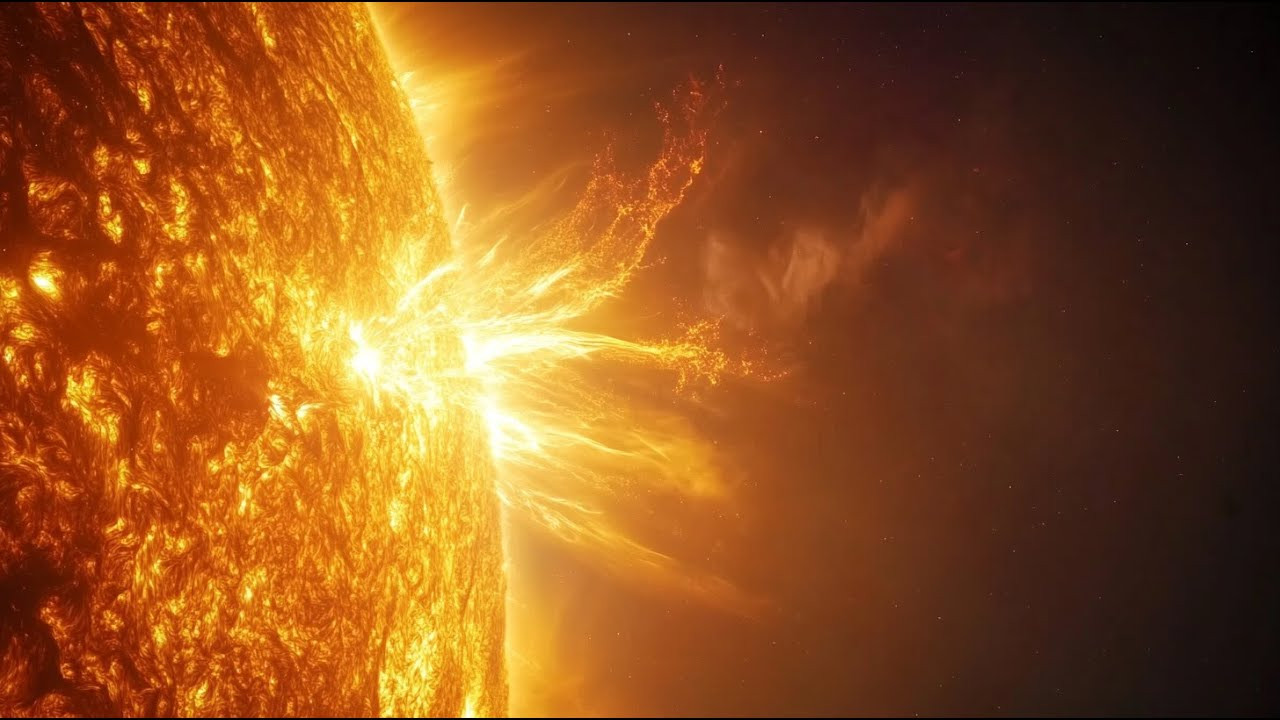
In October, a significant increase in solar activity was recorded. During the first half of the month, six powerful X-class flares occurred on the Sun.
On October 3, an X-9 flare occurred — the largest of the current twenty-fifth solar cycle. It was expected to trigger a G3 class geomagnetic storm on Earth in two days, but the geomagnetic conditions on the planet remained at a normal level, and only on the fourth day, October 7, did the forecast materialize. This delayed arrival of the storm puzzled specialists.
On October 9, an X one eight flare led to a strong G4 magnetic storm, which was just ten percent short of reaching the maximum level of G5. The solar wind speed reached five hundred miles per second, which is twice the norm, while the plasma density was one thousand percent above the norm. This storm was so powerful that auroras were observed in completely atypical locations, such as the Mediterranean coast, and even in Cuba and Haiti, where such phenomena are virtually impossible. Typically, auroras are visible at latitudes of sixty-seven to seventy degrees, but on October tenth, they descended to twenty degrees north latitude. The storm caused disruptions in GPS and radio communications.
The storm led to failures in GPS and high-frequency radio communication. In the United States, farmers had to halt operations or manually recalibrate equipment for precision agriculture that relies on GPS technology.
Publication of this material provides an opportunity for open discussion and does not in itself imply institutional endorsement, confirmation, or scientific verification of the views expressed. The material does not constitute an official statement, expert opinion, or professional advice.