
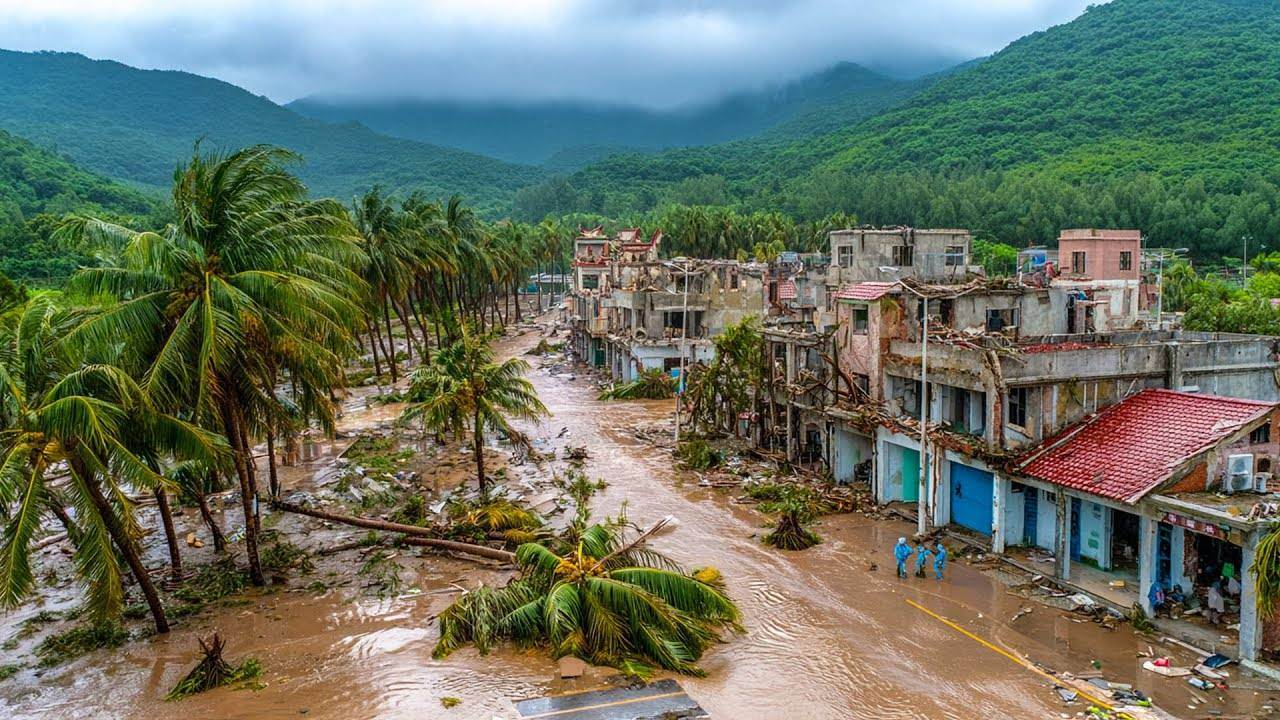
On August 24th, Typhoon Kajiki struck the Chinese city of Sanya in Hainan Province, bringing chaos and destruction. It turned out to be the most powerful typhoon ever recorded in the region: wind gusts exceeded 124 miles per hour, and rainfall was extreme — in the village of Qingtian in the Haitang District alone, more than fifteen inches of rain fell.
The streets were buried under fallen trees — more than twenty thousand of them. Cars were submerged, and windows in houses could not withstand the onslaught of the wind. More than seven thousand households were left without a water supply. In total, 102,500 people in Hainan Province were affected as of August 25.
But even after weakening to a tropical storm, Kajiki did not lose its force: on August 25th, it struck the central and northern provinces of Vietnam, with wind gusts reaching up to eighty-three miles per hour. The scale of destruction was enormous — more than eight thousand seven hundred homes were damaged, two hundred one thousand four hundred acres of rice fields were flooded, and fruit orchards were destroyed.
At least 1.6 million people were left without electricity. Roads turned into rivers or were blocked by landslides. In Quang Tri Province, seven communes were completely cut off from the outside world, and more than forty-four thousand residents had to be evacuated to safe areas.
In total, the typhoon claimed eight lives: seven people died in Vietnam and one in Thailand.
Publication of this material provides an opportunity for open discussion and does not in itself imply institutional endorsement, confirmation, or scientific verification of the views expressed. The material does not constitute an official statement, expert opinion, or professional advice.