
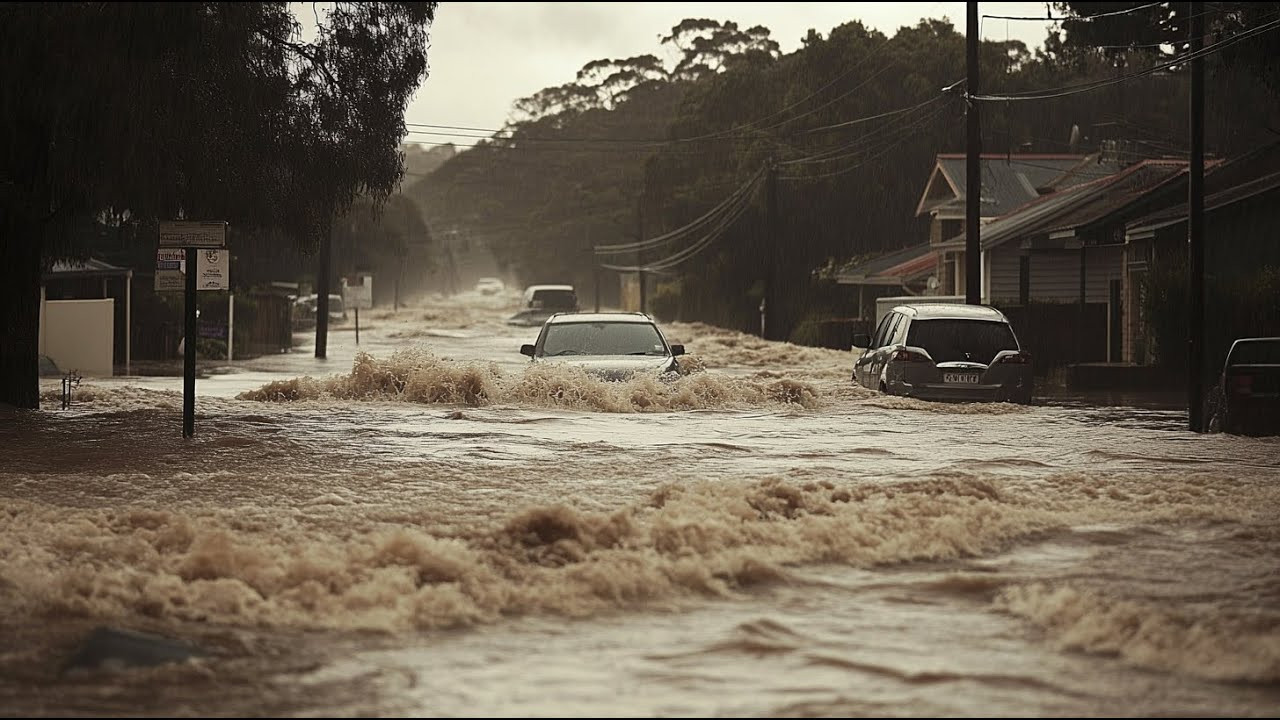
Eastern Australia has experienced several days of extreme rainfall caused by a slow-moving low-pressure system. According to the Australian Bureau of Meteorology, more rain fell in three days than is typically recorded in half a year. In some areas, nearly eighteen inches of rain fell within forty-eight hours.
As a result of the intense downpours, the Paterson, Gloucester, Manning, and Hastings Rivers overflowed, causing widespread flooding in the Hunter and Mid North Coast regions. As of May 21, tens of thousands of people were cut off from the outside world. Many climbed onto the roofs of their houses and vehicles, from where they were rescued by helicopters.
As of May 24, seven people had died.
The floods severely damaged infrastructure: more than one hundred schools were closed, and thousands of homes and businesses were left without power.
The town of Taree was among the hardest hit — over sixteen inches of rain fell in just two days, which is five times the typical amount for May and nearly one-third of the area's annual rainfall. The level of the Manning River exceeded the record set during the catastrophic flood of 1929, reaching over twenty feet and eight inches.
Authorities reported that approximately ten thousand buildings along the coast of New South Wales were either destroyed or severely damaged. More than five hundred of these have already been declared uninhabitable, and officials expect that number to continue to grow.
Even after the floodwaters recede, dangers persist: snakes and rats have appeared in the flooded areas, the water is contaminated, and exposed power lines are present in some places. People returning to their homes are digging through soggy debris in search of anything salvageable.
Coastal zones are covered with debris and the bodies of dead animals.
Even a sanctuary for Tasmanian devils — rare marsupials classified as endangered — was hit by the disaster.
Such extreme rainfall events leading to destructive flooding are not occurring only in Australia, but around the globe. These anomalies are the result of massive changes occurring deep within the planet, which in turn affect all atmospheric processes. Unfortunately, unless urgent action is taken, natural disasters and their consequences will continue to escalate exponentially.
One of the most crucial actions that can give our society a chance to overcome the climate crisis is sharing information with people about the need to address the issue of natural disasters. Dr. Egon Cholakian explores this topic in detail in his address titled “Catastrophic Earthquakes Are Inevitable. Scientists’ Warning”, where he also outlines a forecast of natural disasters for the coming years — should humanity fail to take meaningful steps.
Publication of this material provides an opportunity for open discussion and does not in itself imply institutional endorsement, confirmation, or scientific verification of the views expressed. The material does not constitute an official statement, expert opinion, or professional advice.