
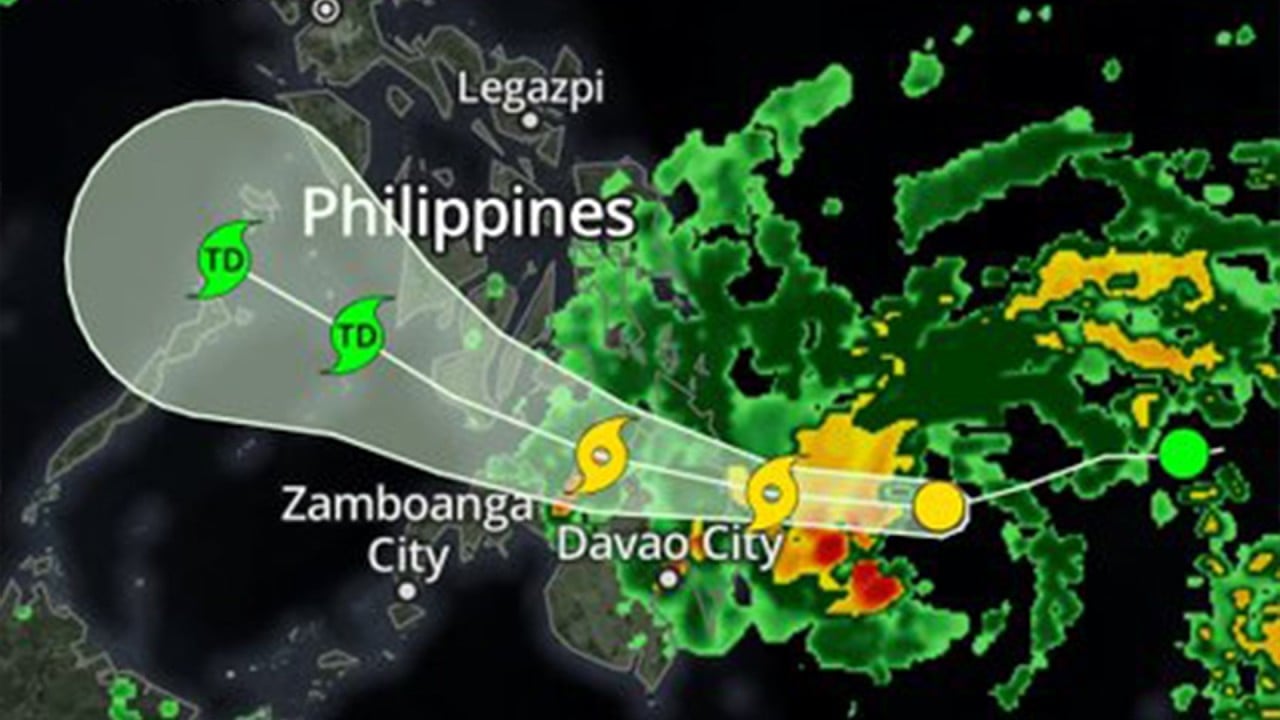
On February third, a tropical system began rapidly forming over the warm waters of the Philippine Sea. In just two days, it intensified into Tropical Storm “Penha,” known in the Philippines as “Basyang.” The storm triggered severe flooding and landslides across the central and southern parts of the Philippines.
On the night of February fifth, the storm made landfall in the province of Surigao del Sur on the island of Mindanao. Although wind speeds were relatively moderate — about thirty-seven miles per hour — the primary threat came not from the gusts, but from a vast cloud system with a rain band stretching up to approximately four hundred ten miles wide. Within hours, torrential rains inundated vast areas.
Rivers overflowed their banks, communities were flooded and partially cut off, and roads were destroyed. The flooding affected the provinces of Agusan del Norte, Surigao del Sur, Lanao del Norte, Misamis Oriental, and other areas.
The situation was particularly severe in the city of Iligan and nearby parts of Misamis Oriental. Surging floodwaters swept through low-lying neighborhoods, washing away homes along the shoreline and carrying vehicles downstream. Residents rushed to evacuate to higher ground, while some were trapped inside their houses.
In Cagayan de Oro, heavy rains triggered a landslide that buried a residential home, killing a family of four.
As the storm moved across the country, nearly eighty seaports were closed, leaving thousands of passengers stranded. Overall, the disaster affected around five hundred thousand people, with tens of thousands forced to evacuate. Twelve people lost their lives.
What is particularly alarming is that “Penha” developed well before the usual start of the Philippine typhoon season, which typically begins in May, bringing significant rainfall and destruction at such an early point in the year.
This fact once again underscores that climate-related disasters are becoming not only more intense and large-scale, but also increasingly unpredictable, leaving people extremely vulnerable to their impact. What is driving this escalation of natural catastrophes, and which of the still remaining possible pathways for stabilizing planetary natural anomalies has been proposed by the international scientific community ALLATRA. The answers are presented in the address by Dr. Egon Cholakian.
Publication of this material provides an opportunity for open discussion and does not in itself imply institutional endorsement, confirmation, or scientific verification of the views expressed. The material does not constitute an official statement, expert opinion, or professional advice.