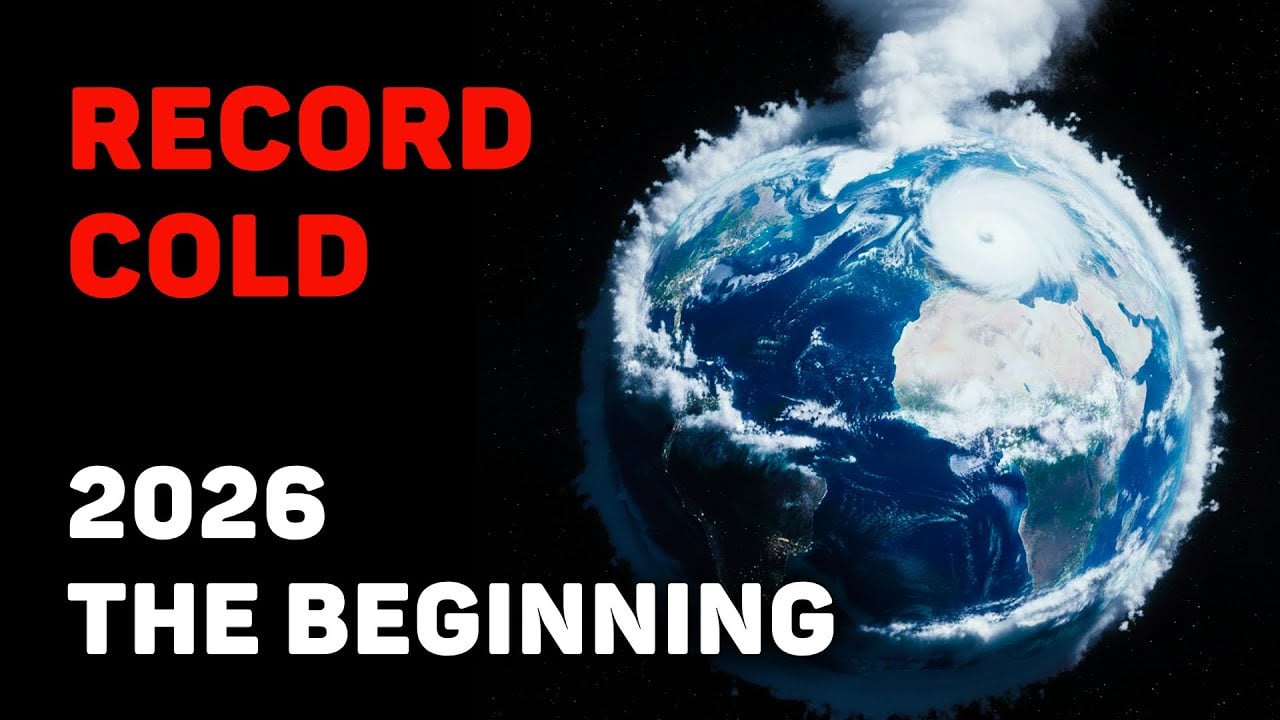
For some people around the world, 2026 did not begin with festive celebrations, but with a series of climate disasters that affected all continents within three weeks. Storm “Goretti,” with wind gusts up to 213 km/h, paralyzed Europe; a 16-meter wave in the Strait of Sicily broke the historical record for the Mediterranean Sea; and in Kamchatka, a snow blockade with drifts over 2.5 meters became the largest in the past 50 years. In the midst of the South American summer, Brazil froze to +1.5 °C, while in Chile, 42-degree heat triggered wildfires that claimed 20 lives.
These are no longer anomalies — this is a new reality, where the shift from “normal weather” to an emergency can take just hours or even minutes. In Australia, rescuers were preparing for wildfires when they were hit by floods, with 175 mm of rain falling in six hours. In Argentina, people were sunbathing on the beach when a meteorological tsunami about 5 meters high swept away dozens of swimmers. In Kamchatka, residents were expecting a typical storm but found themselves trapped in their homes for nearly five days under snowdrifts up to 2.5 meters high. Two elderly men died due to snow sliding off roofs — one was dug out alive, but the ambulance couldn’t reach him because the streets were uncleared.
In Europe, Storm “Goretti” struck France with record gusts of 213 km/h in Barfleur. 380,000 homes were left without power, and coastal towns were flooded. In the Netherlands, KLM canceled over a thousand flights due to a shortage of de-icing fluid. In Germany, blizzards paralyzed rail traffic, and in Bavaria, three people died on icy roads. On January 20, Storm “Harry” hit southern Italy: waves up to 10 meters high destroyed promenades, and in the Strait of Sicily, an oceanographic buoy recorded a 16-meter wave — the highest ever recorded in the history of the Mediterranean Sea.
All of this is happening against a troubling backdrop: micro- and nanoplastics, by accumulating electrostatic charge, have become active participants in climate processes. They disrupt heat exchange between the ocean and the atmosphere, turning the planet into a giant energy accumulator. This energy is transformed into the destructive force of storms, tornadoes, and abnormal precipitation. But the most dangerous effect is that plastic particles penetrate the blood-brain barrier and damage areas of the brain responsible for critical thinking. People lose the ability to properly assess threats and make sound decisions — precisely at a time when it is vitally needed.
We have missed the window for controlled degassing of the Siberian plume. We missed the chance for global implementation of purification technologies — atmospheric water generators (AWG). But humanity still has one last opportunity: to find a way to strip nanoplastics of their electrostatic charge. This is the only way to slow the escalation of disasters. Every day of inaction brings new victims. Every hour of delay brings new lives destroyed.
Time codes:
00:00 — Introduction: 2026 begins with a climate shock
00:46 — Europe: Storm “Goretti” and its impact in France, the United Kingdom, and Germany
05:05 — Greece: 154.5 km/h squall in Alexandroupoli and destruction in Epirus
06:20 — Italy: Storm “Harry,” 16-meter wave in the Strait of Sicily
08:08 — South America: abnormal cold in Brazil and heatwave in Chile
11:02 — Argentina: meteorological tsunami in Mar del Plata
12:32 — Solar activity: X1.9 flare and G4 geomagnetic storm
14:21 — DR Congo: landslide in the village of Burutsi
15:16 — Australia: flooding in southwest Victoria
16:50 — snow blockade in Kamchatka
19:46 — Scientific analysis: why scenarios no longer work
Watch more on our channel about the real causes of escalating climate disasters and their progression, based on mathematical modeling:
📍 "Nanoplastic: A Threat to Life | ALLATRA Popular Science Film"
📍 "The Lost Chance: Controlled Degassing of the Siberian Plume Is No Longer an Option"
Publication of this material provides an opportunity for open discussion and does not in itself imply institutional endorsement, confirmation, or scientific verification of the views expressed. The material does not constitute an official statement, expert opinion, or professional advice.