
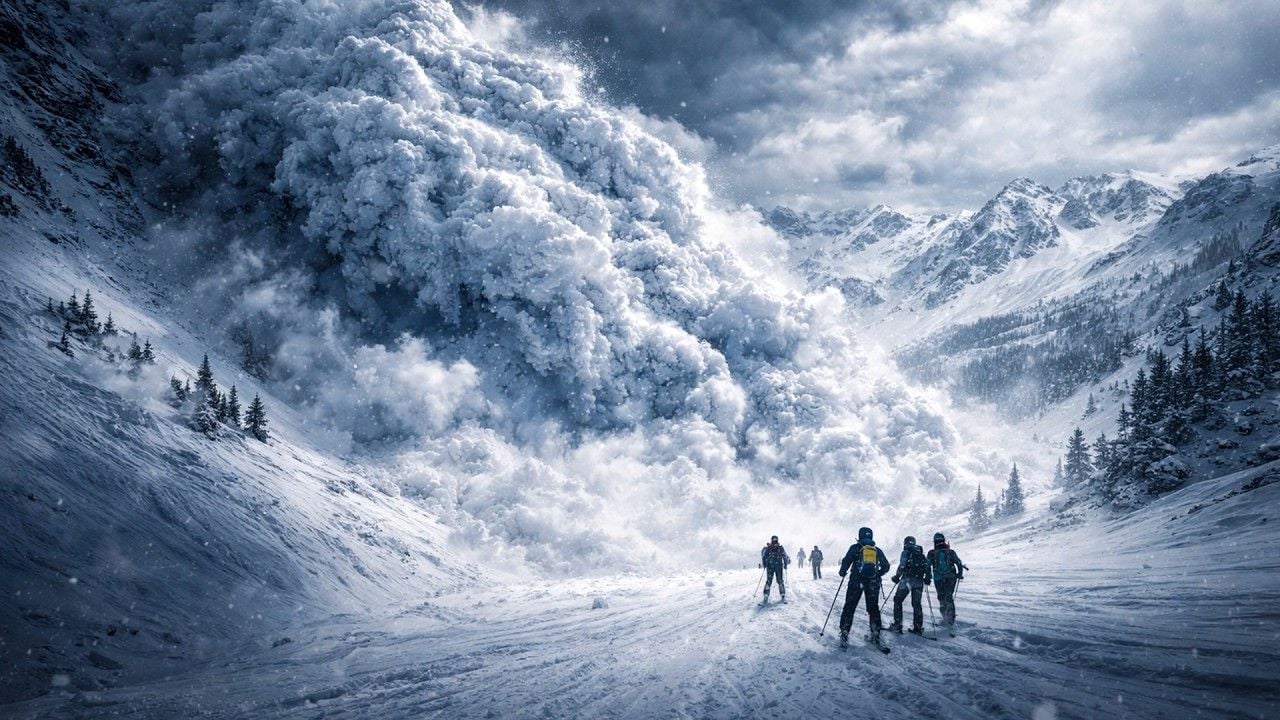
On the morning of February 17, 2026, a powerful snow avalanche released in the Castle Peak area of the Sierra Nevada mountains, near Lake Tahoe, in the state of California. A group of fifteen skiers returning from a three-day backcountry tour in the Tahoe National Forest was caught in the slide.
The avalanche occurred at approximately 11:30 in the morning local time amid a severe winter storm. In a short period, more than 24 inches of fresh snow fell in the area, accompanied by gale-force winds and near-zero visibility. Despite warnings from the Sierra Avalanche Center about extremely unstable snowpack conditions and the risk of large avalanches, the group found itself on a dangerous section of the slope.
As a result of the tragedy, nine people were killed — seven women and two men between the ages of thirty and fifty-two, including three mountain guides. Six people survived, and two of them were hospitalized. The search and rescue operation lasted several days and was carried out under extremely difficult weather conditions, involving Black Hawk helicopters, ground teams, and avalanche rescue dogs; the bodies of all victims were recovered by February 21st.
According to researchers, this avalanche became the deadliest in California and the second deadliest in the United States since the beginning of modern record-keeping in 1950.
The tragedy at Castle Peak once again demonstrated that even experience and professional guiding cannot compensate for ignoring avalanche warnings. We are now living in a time when climatic conditions are becoming abnormal and unpredictable. As a result, routes that were already risky are literally becoming life-threatening. No thrill, however intense, is worth a human life. Take care of yourselves and your loved ones.
Publication of this material provides an opportunity for open discussion and does not in itself imply institutional endorsement, confirmation, or scientific verification of the views expressed. The material does not constitute an official statement, expert opinion, or professional advice.