
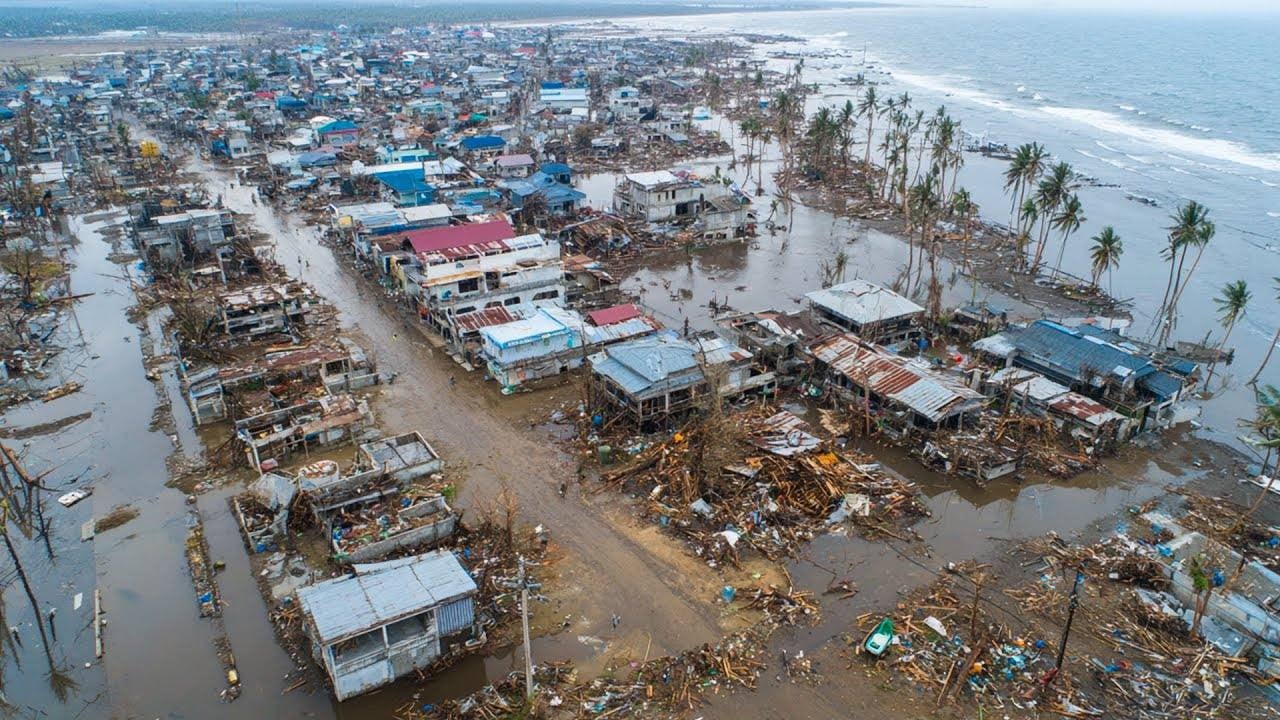
Residents of the Philippines had barely recovered from a series of natural disasters when the fierce Typhoon Kalmaegi, locally named Tino, struck the country. It hit the province of Cebu on November 4, bringing torrential rains, landslides, and catastrophic flooding.
The PAGASA weather service recorded extreme rainfall: the city of Toledo received about sixteen and nine-tenths inches of rain in just one day — while the average monthly rainfall for Cebu in November is only about five and one-tenth inches.
Most hydraulic structures in the region are designed to handle a maximum of about sixteen feet of water, with the strongest built for up to 33 feet. But the typhoon brought as much as 39 feet. Torrents of water rushed down from the mountains into residential areas, where drainage systems were either nonexistent or long incapable of coping with such loads. Poor neighborhoods with fragile infrastructure were completely washed away, and in some places, the water rose to more than ten feet.
Locals shared that they had experienced typhoons before, but Kalmaegi was different — too strong. Once the water receded, the true scale of destruction became visible. People returned to the ruins, clearing layers of mud and debris, searching for anything that could still be salvaged.
A week later, many districts of Cebu were still without running water. Major pipelines and artesian wells had been damaged, and recovery efforts were slow due to collapsed infrastructure. Although Kalmaegi was not the most powerful in terms of wind, its slow movement and enormous volumes of water made it deadly. Most of the victims drowned. Across the Philippines, two hundred thirty-two people were killed, one hundred twelve were reported missing, and five hundred thirty-two were injured.
The typhoon then moved on to Vietnam, which was still recovering from devastating floods the previous week. On November 6, with wind speeds reaching up to one hundred fourteen miles per hour it struck the provinces of Dak Lak and Gia Lai. In just six hours, some areas received about thirteen and eight-tenths inches of rain. Powerful winds toppled trees, tore down walls, and left millions without electricity. The storm damaged nearly thirty thousand homes, three hundred twenty of which were completely destroyed. In Gia Lai Province, more than three hundred thousand people were evacuated — the largest operation in the region’s history. Thanks to these preventive measures, mass casualties were avoided, though the disaster still claimed five lives, and three people remained missing.
Typhoons and other natural disasters are rapidly changing their behavior — a fact now recognized not only by scientists but also by ordinary people.
More than ever, it is vital that emergency services take into account the new nature of these phenomena, and that everyone understands what is happening to our planet and how we can help mitigate the consequences.
This is the message of Dr. Egon Cholakian in his video address.