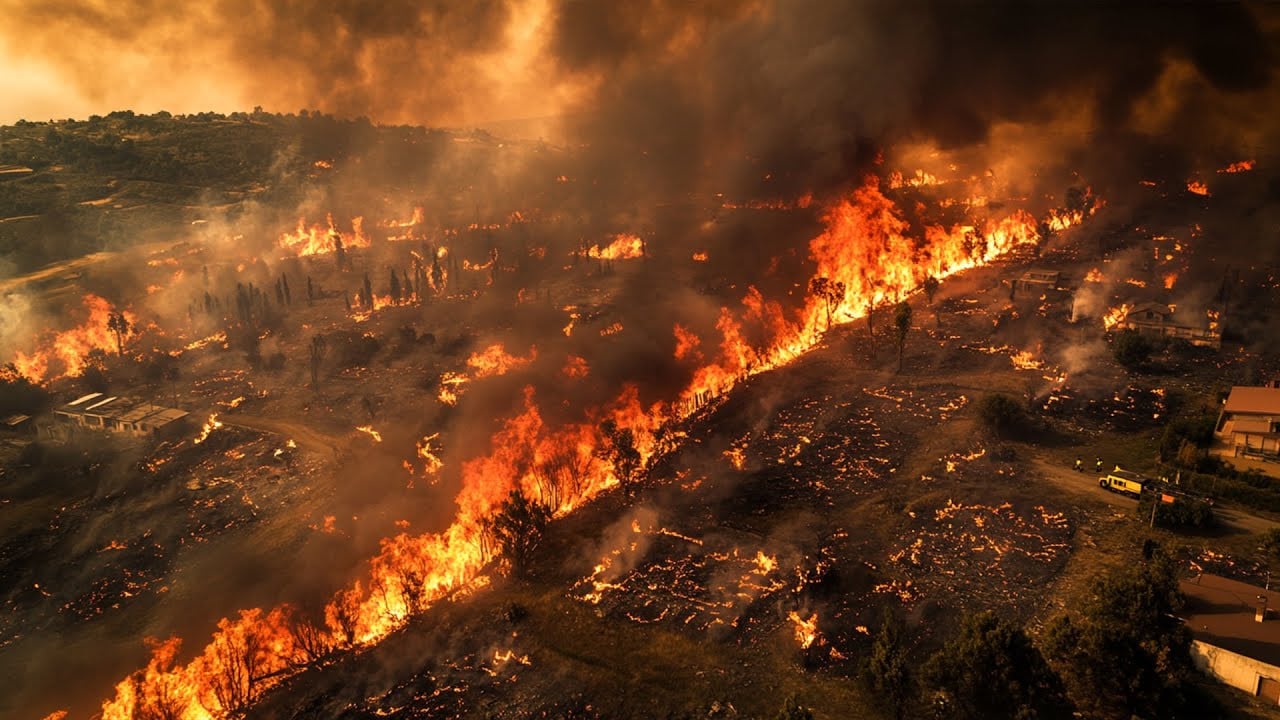
On January 16, large-scale wildfires broke out in the Biobío and Ñuble regions of Chile. A decade-long drought, strong gusty winds, and high temperatures contributed to the rapid spread of the fire. Within just a few hours, a mass evacuation of the population began.
The most tragic situation unfolded in the commune of Penco. At around half past two in the morning, the fire spiraled out of control. A fire vortex formed, literally swallowing entire residential neighborhoods.
Local residents reported that the flames reached unprecedented proportions and advanced all the way to the sea — something that had never happened there before.
More than fifty thousand people were evacuated, and over one thousand were placed in temporary shelters. One eyewitness said that the smoke was extremely toxic, forcing people to flee in the clothes they were wearing, without time to take anything with them. According to him, if they had delayed by another twenty minutes, they would not have been able to escape.
However, there were also those who refused to leave their homes, attempting to protect their property. For some, this decision proved fatal — twenty people lost their lives.
The mayor of Penco emphasized that the suffering of residents goes far beyond material damage. According to him, this is a close-knit community where everyone knows one another, and therefore every loss is felt especially deeply.
The fire destroyed more than one hundred twenty-three thousand five hundred fifty-three acres of forests, agricultural land, and plantations. Around two thousand buildings were fully or partially destroyed.
The wildfire affected a strategically important area of the region. One of Biobío’s key ports is located in Lirquén, playing a major role in the export of forest products and serving as the main transportation hub connecting the region with the rest of Greater Concepción via Route One Hundred Fifty.
According to Miguel Castillo, Director of the Wildfire Engineering Laboratory at the University of Chile, the defining feature of the current fire season is the unprecedented extent of burned areas. The burned territory has increased by nearly threefold, despite the fact that the total number of fires remains within normal limits and is even below average.
This means that a smaller number of fires is causing significantly greater damage, and this trend is becoming increasingly characteristic of wildfire seasons worldwide.
Why natural disasters are becoming more and more catastrophic in nature — and, most importantly, what we as humanity can do to change this trend — can be learned from the video reports by Doctor Egon Cholakian.
Publication of this material provides an opportunity for open discussion and does not in itself imply institutional endorsement, confirmation, or scientific verification of the views expressed. The material does not constitute an official statement, expert opinion, or professional advice.