
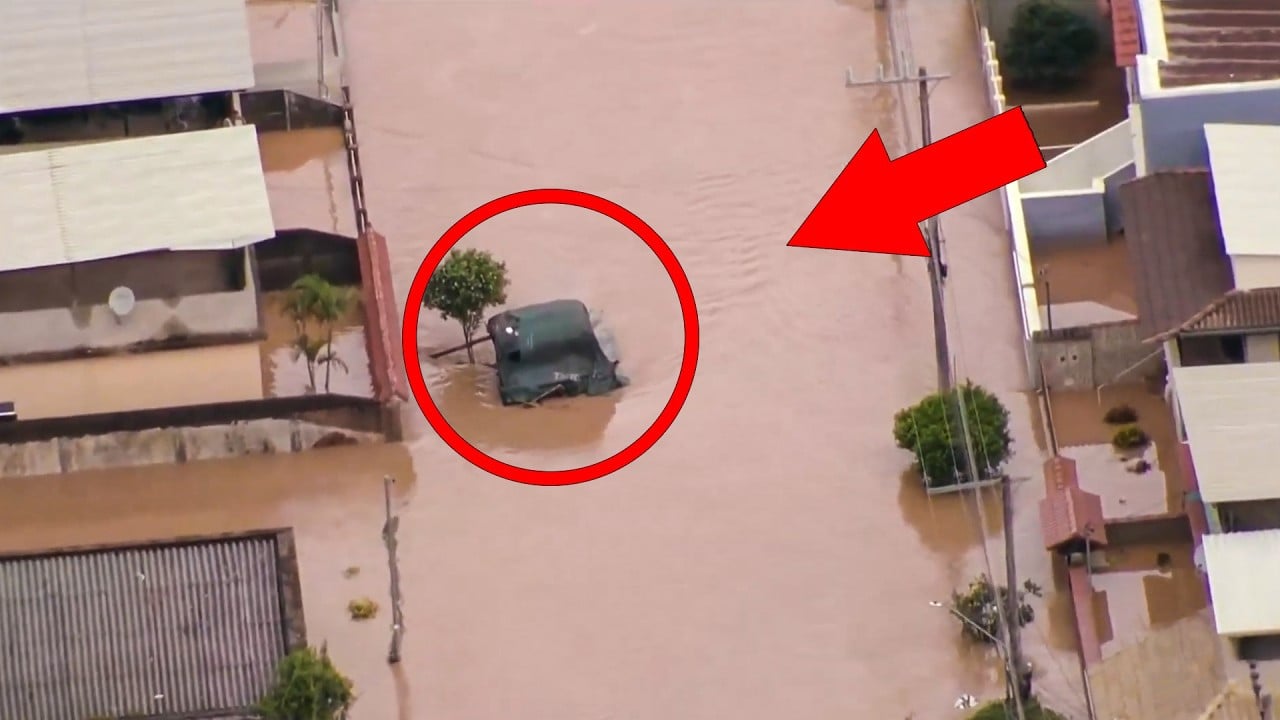
On February 23, extreme torrential rains struck the Zona da Mata mesoregion in the state of Minas Gerais.
Experts note that the scale of the flooding was largely related to the local terrain: Juiz de Fora and Ubá are located in a hilly area with valleys where, during intense downpours, water rapidly runs off the slopes into low-lying areas, quickly inundating streets.
The municipality of Juiz de Fora was hit the hardest. The storm there began late in the evening, causing the Paraibuna River and other streams to overflow. In one district of the city, a weather station recorded approximately 7.5 inches of rainfall, while the average precipitation for the entire month of February in Juiz de Fora is about 6.7 inches. In some locations, up to 3.1 inches of rain fell in just one hour, leading to sudden flash floods. Muddy torrents of water swept cars and debris through city streets. During the night, a powerful landslide destroyed twelve houses while people were inside at the moment the ground collapsed. In total, at least twenty landslides were recorded, and some neighborhoods were completely cut off. Search teams with dogs operated in the affected areas.
Bridges and access roads to the city center were closed, and a state of emergency was declared in Juiz de Fora. Classes at all educational institutions were suspended for several days. Units of the state and national civil defense were deployed to strengthen the emergency response. Residents were advised to leave their homes due to the risk of new landslides.
In the municipality of Ubá, about 4.9 inches of rain fell in just six hours and approximately 6.4 inches within twenty-four hours, which corresponds to the average rainfall for the entire month of February.
The enormous volume of water caused the Ubá River to overflow its banks: streets, residential buildings, and commercial properties were flooded, and three bridges were severely damaged. Three buildings and one residential house collapsed. The disaster also affected large car dealerships — Hyundai, Nissan, and Fiat showrooms were completely submerged.
Footage recorded by eyewitnesses shows a powerful current carrying away several coffins after floodwaters inundated a local funeral home.
One of the most alarming situations occurred at a nursing home: water rapidly filled the building, leaving elderly residents cut off from the exit. They were urgently evacuated to the upper floor, while some people waited for help while standing directly in the water.
Just three days after one of the strongest rainstorms in the city’s history, on the evening of February 25, another powerful storm hit Juiz de Fora. Rain continued for several hours. According to the National Center for Monitoring and Early Warning of Natural Disasters, by midnight, more than three point nine inches of rainfall were recorded at two meteorological stations: about four point five inches in Graminha and about four point four inches in Cidade Universitária.
Streets were once again quickly submerged, flooding and flash floods began. Business owners urgently tried to save their shops, bailing out water with buckets and pushing it away with squeegees. Due to the heavy rains, river levels rose sharply: the Santa Luzia stream began to overflow near an emergency care unit. During the storm, a motorcycle courier was swept away by floodwaters on a submerged road. Flooding was also reported at the municipal hospital.
Juiz de Fora recorded the rainiest February in its entire history of observations: approximately 23.2 inches of precipitation fell during the month, compared with an average monthly norm of about 6.7 inches, which is more than three times higher than usual.
According to official data, 69 people were killed as a result of the disaster: 63 in Juiz de Fora and 6 in Ubá. Another five people are listed as missing. More than 5500 residents were forced to leave their homes.
Local residents are extremely concerned that extreme weather in the region has begun to recur far too often. Unfortunately, these are not the worst manifestations of weather anomalies that humanity still has to face. As we have stated many times before, global climate change on the planet today is being exacerbated by the presence of microplastic and nanoplastic particles in the atmosphere, the oceans, and other environments, making climate-related disasters more destructive. More details on this topic can be found in the documentary film “Nanoplastics. Threat to Life | ALLATRA Documentary.”
Publication of this material provides an opportunity for open discussion and does not in itself imply institutional endorsement, confirmation, or scientific verification of the views expressed. The material does not constitute an official statement, expert opinion, or professional advice.