
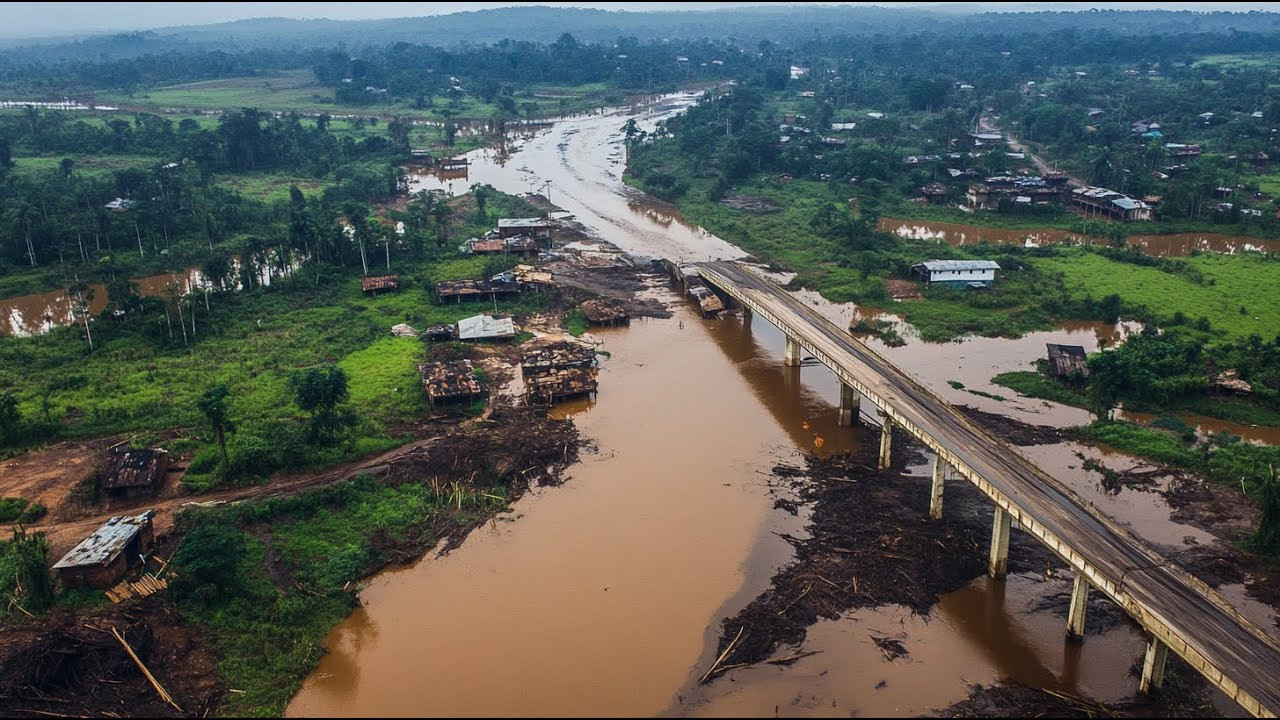
The eastern Democratic Republic of the Congo has once again been hit by a natural disaster.
On May 6, the city of Kalemie in Tanganyika Province suffered severe flooding caused by the Kalemie River overflowing its banks. The flood inundated residential areas, streets, and homes, destroying infrastructure and forcing hundreds of families to flee. Despite the absence of casualties, the material damage is significant, and the health risks for residents remain serious due to the threat of infections and diseases.
On May 8, heavy rains hit South Kivu Province. The Kasaba River overflowed, and raging torrents of water rushed downstream, sweeping away rocks, trees, mud, and everything in their path. The village of Kasaba in the Ngandja sector of the Fizi territory was particularly affected.
According to eyewitnesses, the disaster struck the village around 5 a.m. on May 9, when most residents were still asleep. The current was so powerful that it destroyed at least 150 homes. Official data confirms 110 fatalities, but local activists report a higher death toll. Most of the victims were children and the elderly. Another 28 people were injured, and dozens remain missing.
Rescue operations are complicated by harsh conditions. The village of Kasaba is cut off from the rest of the country: there is no mobile connection, and it can only be reached by water. This makes the rapid delivery of humanitarian aid nearly impossible and hinders search coordination.
Flooding is not uncommon in this region during the rainy season, but the scale of the current tragedy has shocked both the authorities and local residents.
Natural disasters are intensifying not only in Congo, but this is a global process affecting the entire planet. Behind the sharp rise in natural catastrophes lie dangerous processes occurring deep within the Earth. In his address, Dr. Egon Cholakian speaks about critical geological threats and shares scientific solutions that could save millions of lives. Watch this video — it concerns everyone.
Publication of this material provides an opportunity for open discussion and does not in itself imply institutional endorsement, confirmation, or scientific verification of the views expressed. The material does not constitute an official statement, expert opinion, or professional advice.