
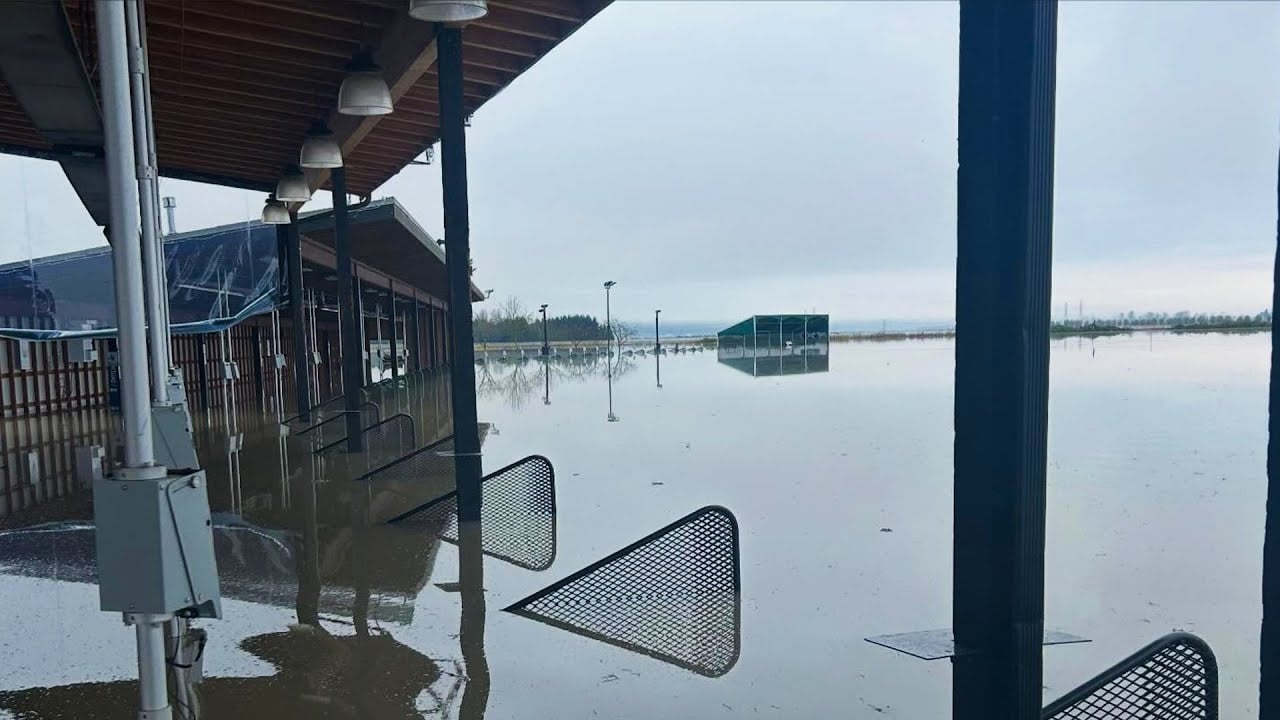
From December 8 to 12, the U.S. state of Washington was hit by a powerful “atmospheric river."
In the Cascade and Olympic Mountains, more than 17 inches of precipitation fell in some areas over 3 days, and several consecutive atmospheric flows intensified the flooding, causing dozens of rivers to overflow simultaneously and triggering one of the heaviest floods in recent decades.
At the same time, the warm air characteristic of atmospheric rivers melted the snowpack in the mountains, further increasing the flow of water into already overflowing rivers and streams.
As a result, in the western part of the state, especially in the counties of Skagit, Whatcom, King, and Snohomish, water levels reached heights that meteorologists classify as once-in-a-century.
A state of emergency was declared across the entire state.
Nearly one hundred thousand people living along the rivers were at risk. Residents were urged to evacuate to higher ground, where temporary shelters were opened for them. The hardest hit were areas that are still recovering from the devastating flood of 2021. In the city of Sumas, water levels reached fourteen and a half feet. Rescuers worked from inflatable boats to evacuate people from flooded homes, and several families had to be airlifted from rooftops by helicopters.
Dam breaches in King County along the Green River in Tukwila and Pacific caused sudden flooding in the surrounding areas. Landslides and rockfalls blocked mountain passes and roads, including sections of Interstate 90. Strong winds with gusts exceeding 105 miles per hour knocked down trees and power lines, damaging homes and blocking access.
The National Guard was involved in the rescue operations: hundreds of servicemembers went door to door in dangerous areas, assisting residents with evacuation. Federal and state agencies, including FEMA, were activated to provide aid to those affected.
According to official data, one fatality was confirmed: a man drowned while attempting to drive on a flooded road, ignoring warnings.
Floods like this are becoming part of a new climate reality. Scientists are increasingly pointing to nanoplastic as one of the factors capable of affecting climate processes and more. Its particles have already been detected everywhere: in soil, water, the atmosphere, and even the human body.
The scale of this threat is explored in the film “Nanoplastic: A Threat to Life”.
Publication of this material provides an opportunity for open discussion and does not in itself imply institutional endorsement, confirmation, or scientific verification of the views expressed. The material does not constitute an official statement, expert opinion, or professional advice.