
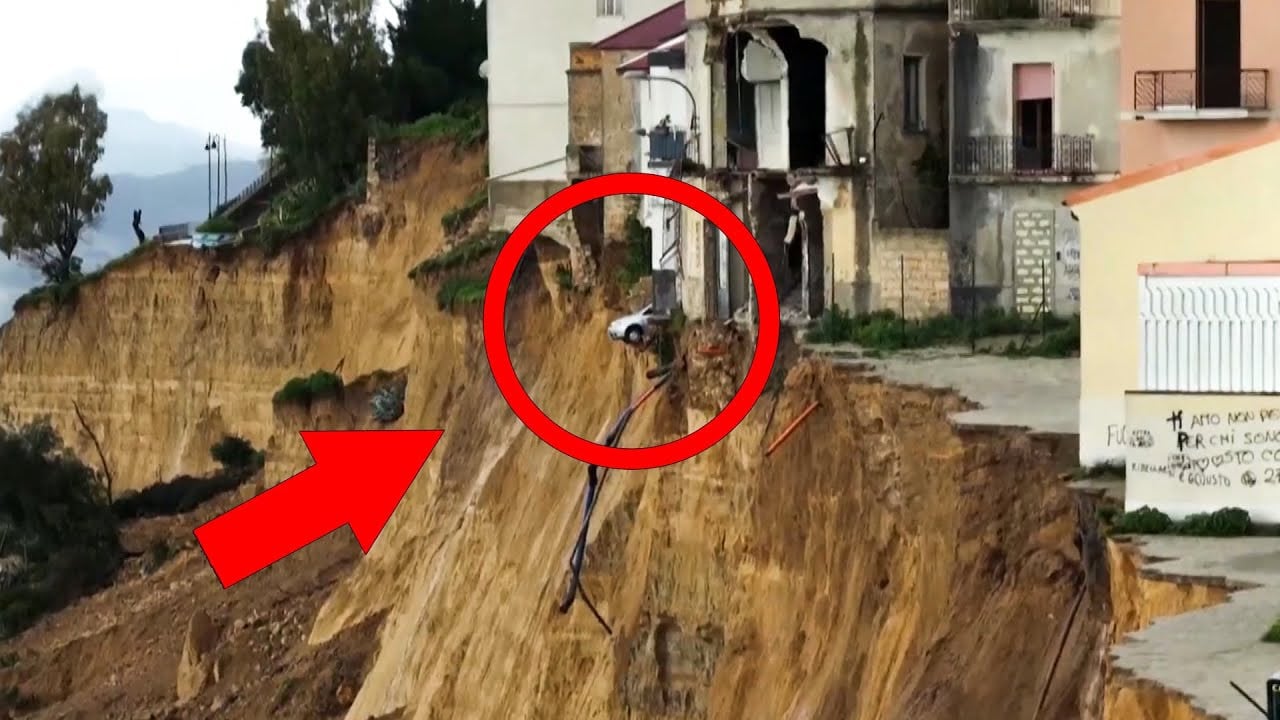
Beginning on January 20th, Europe was struck by the Mediterranean cyclone “Harry.” The storm hit southern Italy, affecting mainland Calabria as well as the islands of Sicily and Sardinia.
The cyclone was accompanied by extreme and anomalous precipitation. In the Calabrian town of San Sostene, nearly 22 inches of rain fell over 72 hours, which is almost equal to the annual average precipitation for this region. Such an extraordinary volume of rainfall triggered sudden flash floods and landslides, paralyzed ferry connections with smaller islands, and left several communities completely isolated.
The most severe situation developed in Catania, a major city on the eastern coast of Sicily, as well as in Catanzaro, the administrative center of Calabria. In these areas, flood damage reached its maximum extent: roads and utility networks were destroyed, and schools and government institutions were closed.
Emergency services responded to more than 1600 incidents. Floodwaters submerged streets, vehicles, and the ground floors of buildings. People were evacuated by boat, and dozens of families were forced to leave their homes.
Along the Ionian coastline, the storm generated waves reaching heights of up to approximately 33 feet. These waves destroyed promenades, damaged ports, and sank fishing vessels. In Santa Teresa di Riva, the sea completely destroyed a section of the coastal road.
In open waters, the power of the cyclone was even more extreme. In the Strait of Sicily, between Sicily and Malta, an oceanographic buoy operated by the Italian National Institute for Environmental Protection and Research (ISPRA) recorded a wave height of approximately 52 feet, the highest wave ever documented in the Mediterranean Sea.
Preliminary estimates place the damage in Sicily alone at one billion euros.
In Malta, the storm caused serious disruptions to transportation and extensive damage to coastal areas, particularly in the southern part of the island.
Europe has experienced winter storms in the past, but over the last several years — and especially in 2025 and 2026 — these events have become exceptionally large in scale, while the intervals between such extreme weather impacts have shortened to a minimum.
Humanity must comprehensively study these changes, understand their underlying mechanisms, and unite global efforts to find solutions. The international scientific community of ALLATRA has been researching the causes of increasing climatic and geodynamic catastrophes on Earth for a long time and is already proposing concrete, scientifically grounded practical measures to reduce their intensity and scale.
More information on this topic can be found in the documentary film “Nanoplastics: Threat to Life | ALLATRA Documentary.”
Publication of this material provides an opportunity for open discussion and does not in itself imply institutional endorsement, confirmation, or scientific verification of the views expressed. The material does not constitute an official statement, expert opinion, or professional advice.