
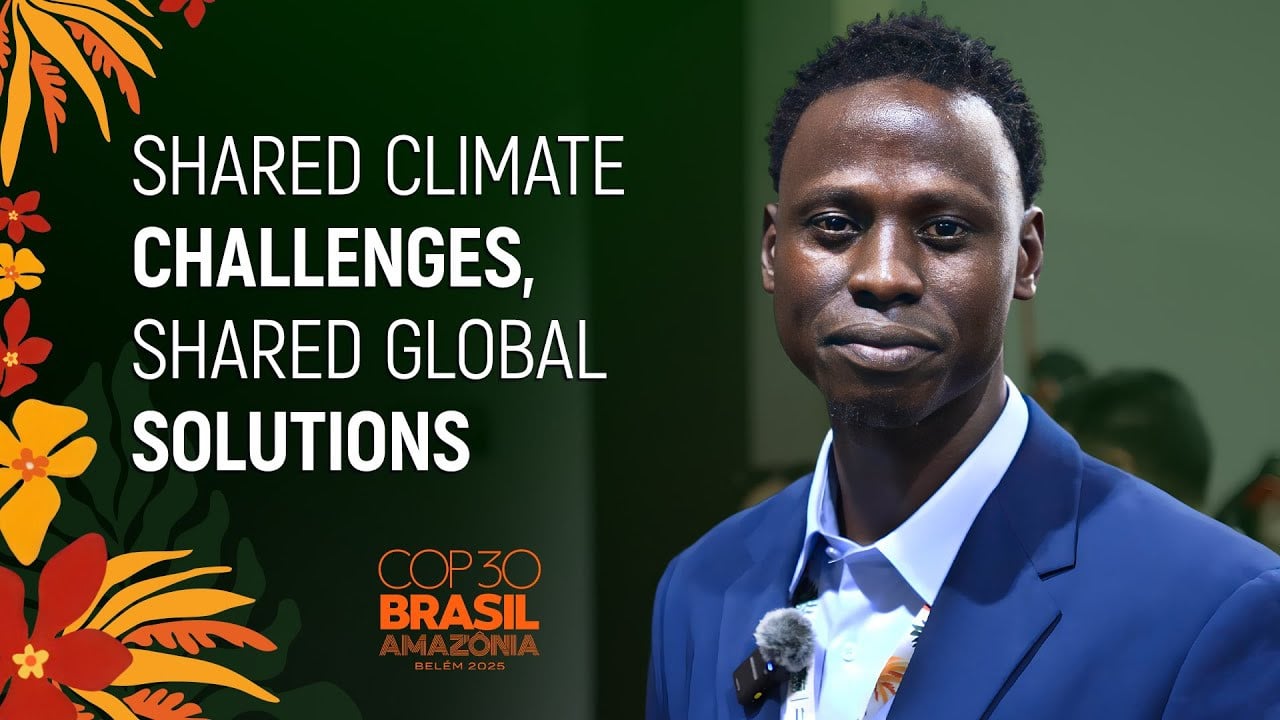
In this interview at COP-30, the ALLATRA International Public Movement speaks with Kebba Jabang, Finance and Project Coordinator of Sanyang Youths for Environmental Protection and Development (SANYEPD) from The Gambia. He represents a youth organization that is actively engaged in environmental protection, sustainable development, and raising climate awareness.
Kebba Jabang is a key participant in environmental initiatives in The Gambia, overseeing projects that focus on protecting natural resources, promoting sustainable agriculture, and supporting local fishing communities. He pays particular attention to ecosystem conservation, addressing the impacts of industrial fishing that threaten traditional fishing livelihoods, while also developing climate education programs and engaging with vulnerable groups within society. As part of his work, Kebba collaborates with partners such as Blue Ventures, an organization that helps expand the reach of educational efforts and strengthen practical environmental initiatives on the ground.
SANYEPD (Sanyang Youths for Environmental Protection and Development) is a youth-led civil society organization based in the coastal region of The Gambia, with the aim of protecting the environment and promoting sustainable community development. SANYEPD implements projects focused on mangrove restoration, biodiversity conservation, climate change education, and strengthening the capacity of local communities. The organization places special emphasis on intergenerational dialogue, the involvement of women and youth in environmental initiatives, and strengthening international cooperation to increase the impact of its projects beyond The Gambia.
In the interview, Kebba Jabang notes that participation in COP-30 is essential for establishing international partnerships that help amplify the organization’s voice and expand the impact of environmental initiatives at the global level, as climate challenges affect the entire world.
Speaking about his impressions of the conference, Kebba highlights the openness and hospitality of the host country, as well as the importance of international cooperation. According to him, joining forces with organizations from different countries is essential to broaden climate education efforts and achieve tangible results, as climate change knows no national borders.
Kebba Jabang shares that The Gambia is already experiencing serious consequences of climate change, such as sea-level rise and environmental degradation, which affect the quality of life of the local population. He emphasizes that effective environmental action requires financial support and international cooperation, as the capacities of a small country are limited, and without external partners, the scale of impact remains constrained.
This interview underscores the significance of intercultural cooperation, environmental education, and the active involvement of youth organizations in global climate discussions.
Publication of this material provides an opportunity for open discussion and does not in itself imply institutional endorsement, confirmation, or scientific verification of the views expressed. The material does not constitute an official statement, expert opinion, or professional advice.