
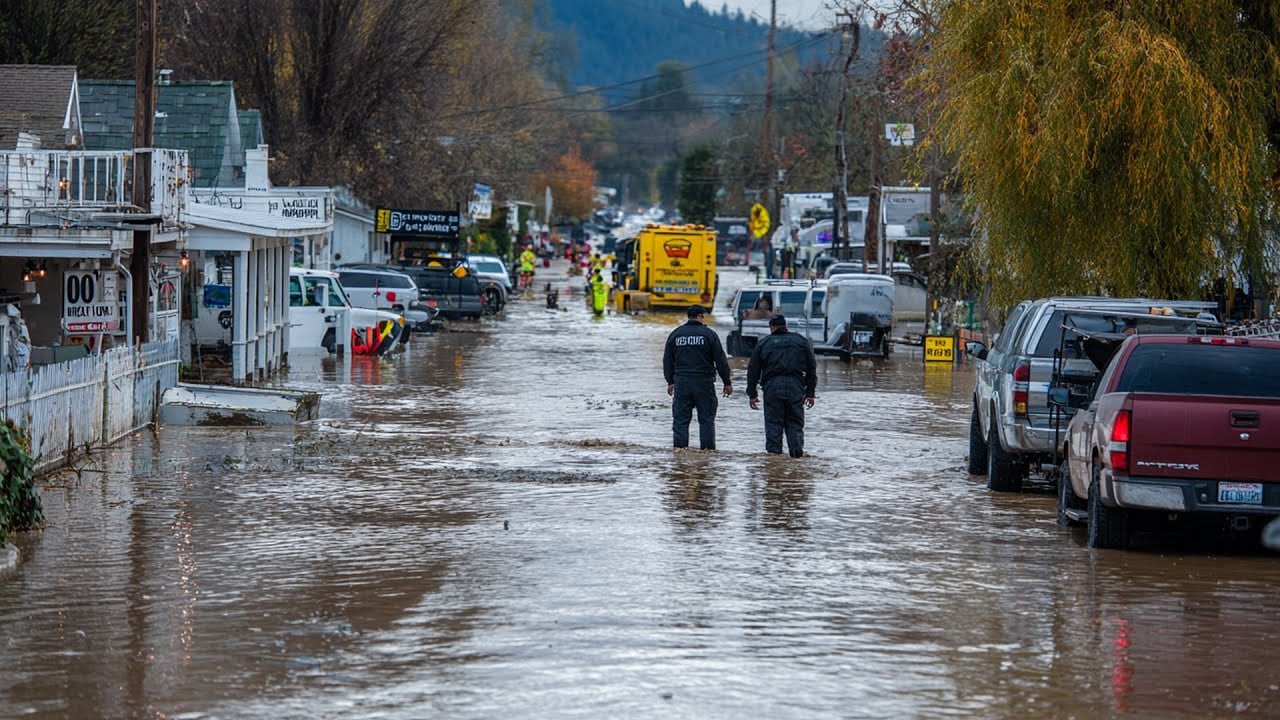
From December 20 through December 23, Northern California in the United States was affected by a powerful atmospheric river known as the Pineapple Express.
The Pineapple Express is a stream of warm, moisture-laden air that moves across the Pacific Ocean toward California, bringing intense rainfall and heavy snowfall. It is called “pineapple” because the flow often originates near Hawaii, which is well known for its pineapple plantations.
The anomaly delivered up to nearly six inches of rain in low-lying areas, far exceeding seasonal averages and causing rivers to overflow as well as overwhelming urban drainage systems.
An evacuation center was opened for residents whose homes were located in flooded areas, and emergency services carried out numerous rescue operations, helping people safely leave hazardous zones.
The most difficult situation developed in Redding, where underpasses and transportation interchanges were rapidly submerged. A sudden rise in water levels led to a fatality: a driver became trapped in a vehicle on a flooded roadway, and despite the efforts of a police officer and emergency responders, the person could not be saved.
In Placer County, firefighters rescued a family with an infant, guiding them through a fast-moving current after rising river water surrounded their home.
The natural disaster also affected the state’s transportation infrastructure. At San Francisco International Airport, flights were temporarily suspended, while delays were reported at the airports in Los Angeles and Sacramento. Several roads, including U.S. Highway One-Zero-One, one of the main highways along the U.S. West Coast, were closed due to flooding.
Many experts note that atmospheric rivers forming over the United States have become exceptionally powerful and long-lasting. In addition to increased atmospheric moisture, there is another significant factor behind this trend: the presence of micro- and nanoplastic particles in the atmosphere, which have already become active participants in climate processes. More about this — and about the effects of plastic on the human body — can be seen in the film “Nanoplastics. Threat to Life | ALLATRA Documentary.”