
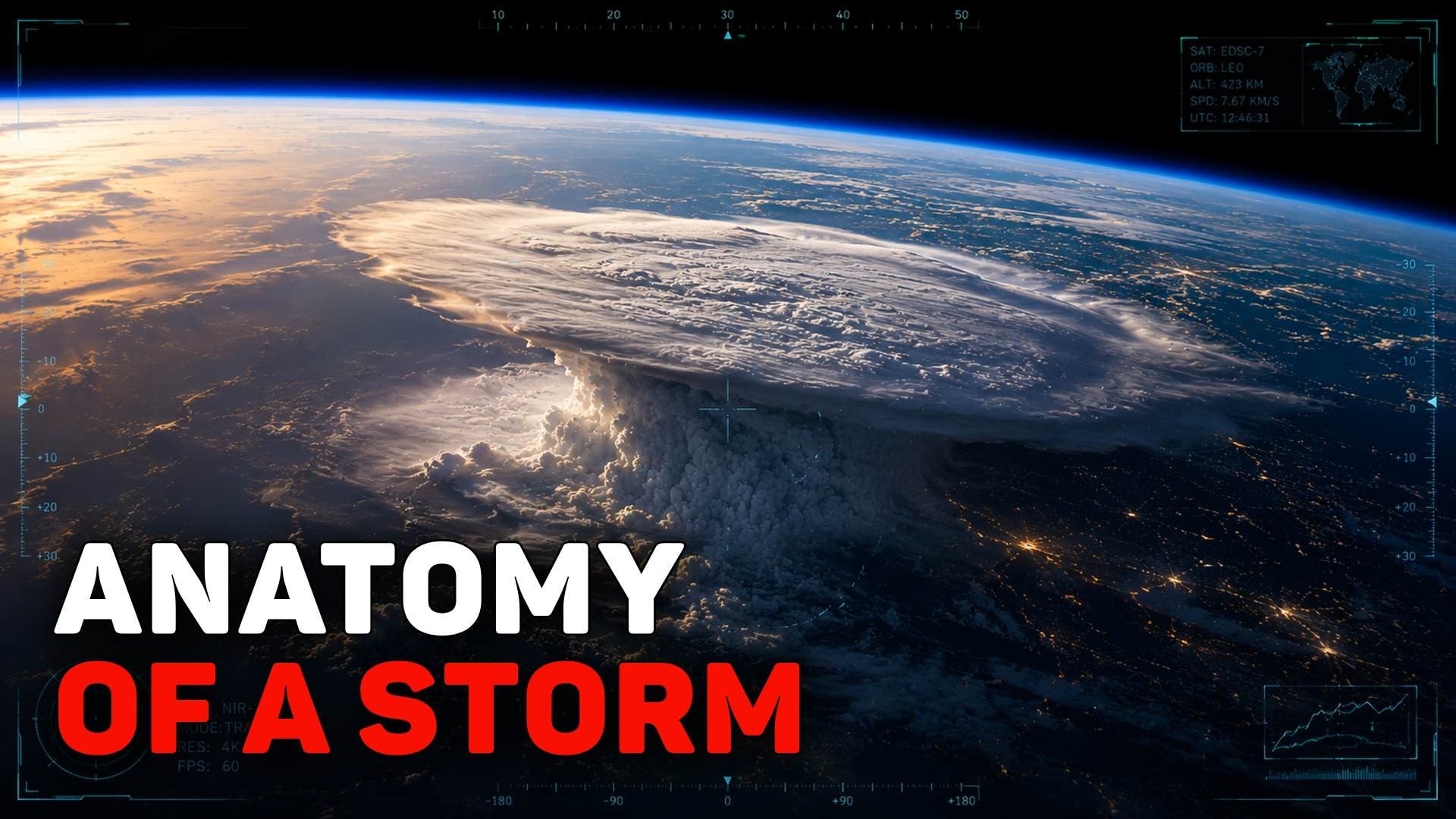
One-and-a-half-meter hail drifts in Armenia and an outbreak of 42 tornadoes across the U.S. Midwest were the week's most significant events. While utility crews were clearing massive accumulations of hail and ice in Gyumri, EF-3 tornadoes in Illinois and Indiana destroyed homes, devastated crops, and left hundreds of thousands of customers without power. In Papua New Guinea, pumice rafts generated by an eruption of the submarine Titan Ridge volcano reached the shores of Manus Province, blocking access to coastal villages and creating a humanitarian threat.
At the same time, Switzerland and Canada experienced severe thunderstorms with hailstones up to 10 cm in diameter. This synchronization of natural disasters — from tornado outbreaks and hailstorms to volcanic activity and extreme precipitation — may reflect broader shifts in the planet’s climate system. A chronicle of climatic processes and geophysical activity for the period from June 8 to June 14, 2026.
Time codes:
00:00 Introduction
00:50 Armenia: unprecedented hailstorm in Gyumri, damage to infrastructure and agriculture
04:30 United States: Midwest tornado outbreak, destruction in Illinois and Indiana
08:15 Papua New Guinea: pumice rafts block the coast of Manus Island
11:40 Switzerland: severe thunderstorm in Ticino, hail up to 7 cm in diameter
14:20 Canada: Manitoba storm, approximately 20,000 insurance claims
17:30 Conclusions: large hail as an indicator of intensifying convective storms worldwide
Convective storms are becoming an increasingly prominent weather threat across the planet. More and more often, weather reports feature not just thunderstorms, but supercells capable of producing destructive windstorms, extreme rainfall, large hail, and tornadoes. The impacts of these events are already increasing faster than cities and infrastructure can adapt to them.
One of the clearest indicators of these changes is large hail. A study published in the scientific journal Nature Geoscience examined hailstorms producing hailstones larger than 5 cm in diameter during the period from 1950 to 2023. It is this very large hail that causes the most severe damage to property and infrastructure, often resulting in losses worth billions of dollars. The study identified the world's main hotspots of very large hail and the countries that suffer the greatest hail-related losses. It also found that the sharpest increase in the frequency of such events has been observed in Europe.
An increasing number of scientists are also drawing attention to the presence of microplastics and nanoplastics in the atmosphere. These particles can act as additional nuclei around which water droplets and ice crystals form. Moreover, experiments suggest that droplets containing microplastic particles may freeze at higher temperatures than pure water, meaning they can begin freezing earlier and at lower altitudes.
Thus, microplastics may interfere with the mechanisms of precipitation formation, meaning their influence on climate and atmospheric processes can no longer be ignored.
This is confirmed not only by scientific studies and statistics. Increasingly, people themselves are saying that hail has changed — it is larger, more destructive, and more dangerous than before. It is destroying crops on a scale rarely seen in the past, damaging homes and vehicles, injuring people, and killing livestock. Particularly concerning is the fact that even regions where hail was once not considered a major threat are now being affected.
New climate risks must be taken into account in forecasting, crop protection, urban planning, and early warning systems. Scientists will also need to further investigate these mechanisms and find ways to mitigate the impact of micro- and nanoplastics on the planet’s climate balance.
Publication of this material provides an opportunity for open discussion and does not in itself imply institutional endorsement, confirmation, or scientific verification of the views expressed. The material does not constitute an official statement, expert opinion, or professional advice.