
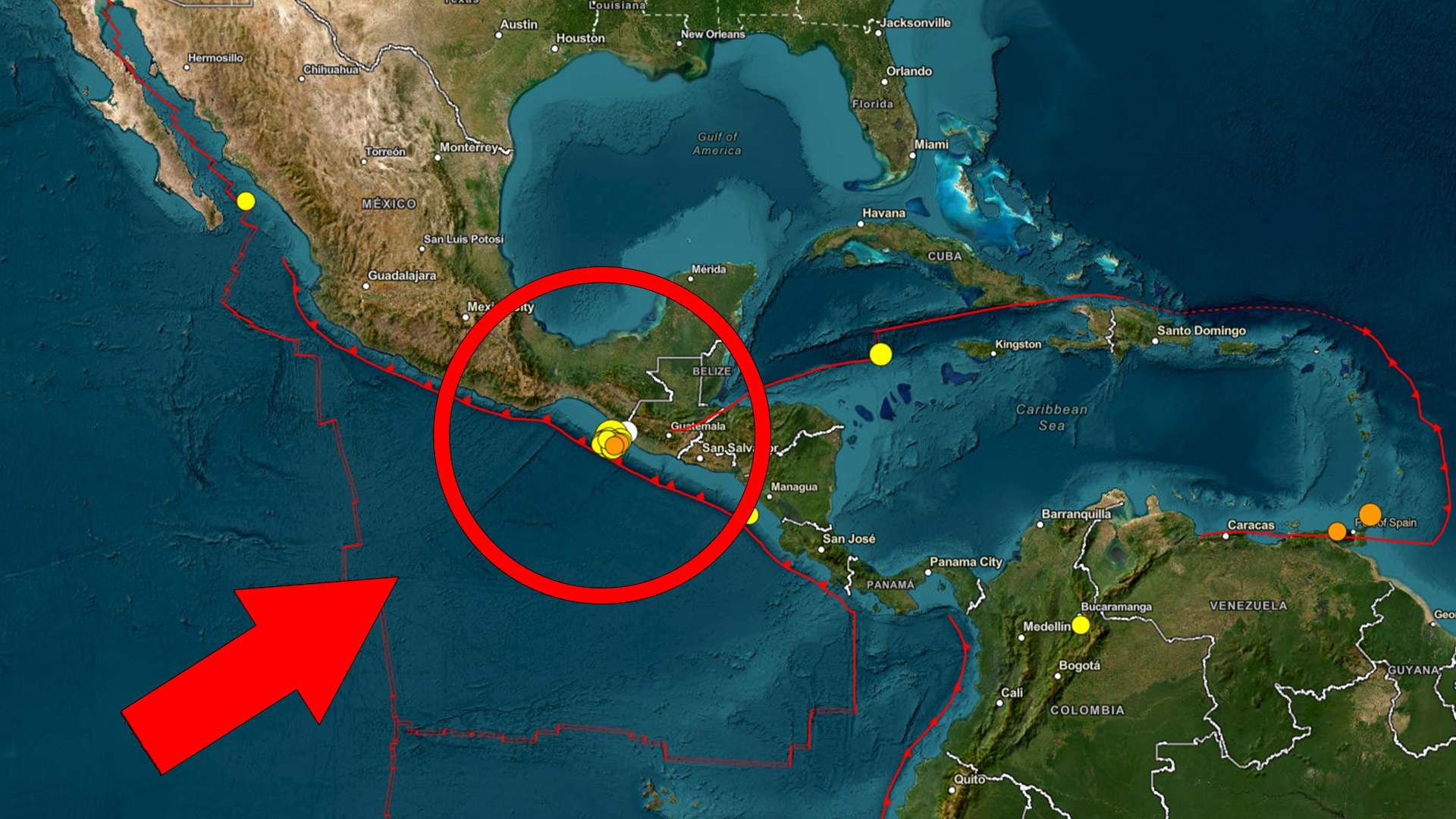
On July 17, at about 8:48 in the morning local time, a powerful magnitude 7.4 earthquake struck off Mexico’s Pacific coast. The epicenter was located in the ocean off the coast of the state of Chiapas, near the border with Guatemala, approximately 34 miles west-southwest of the city of Ocos in the San Marcos Department.
According to regional seismological agencies, the earthquake originated at a depth of about six miles.
The strongest shaking was felt in Chiapas, particularly in coastal areas, including Tapachula, Ciudad Hidalgo, and Puerto Madero. People rushed out of homes, stores, and government buildings. Furniture and chandeliers swayed indoors, and objects fell from shelves and other surfaces.
In Guatemala, particularly strong tremors were reported in the western and southwestern parts of the country. They were felt in at least eleven departments, including San Marcos, Quetzaltenango, Retalhuleu, Suchitepéquez, Sololá, Totonicapán, and Guatemala. In the capital, people left buildings, and precautionary evacuations were carried out at several government institutions. Cracks and localized damage to building facades were reported in San Marcos. The earthquake was also felt by residents of El Salvador, including San Salvador, although no serious destruction was recorded there.
Despite the high magnitude and shallow depth of the earthquake, widespread destruction and loss of life were avoided. Several injuries were reported, some of them caused by panic. In the Mexican city of Tapachula, a woman jumped from the second floor of a building and suffered fractures. Damage to walls and facades, falling plaster, small landslides, and rockfalls were recorded in several communities.
However, major roads, hospitals, and essential infrastructure continued to operate, and medical facilities in southeastern Mexico did not sustain serious damage.
Because the epicenter was located in the ocean, a warning of a possible tsunami was issued for areas within a radius of about 186 miles. Waves of up to approximately three feet were considered possible along the Mexican coast, and residents of coastal areas in Mexico and Guatemala were temporarily advised to stay away from beaches, ports, and river mouths. The warning was later canceled.
The main shock was followed by a prolonged series of aftershocks. By the morning of July 20, Guatemalan specialists had linked 313 seismic events to the sequence, 33 of which were felt by the population. The strongest aftershock reached magnitude 5.7. Residents were advised not to enter buildings with visible damage and to watch for the appearance of new cracks, as aftershocks could further weaken already compromised structures.
This earthquake once again demonstrated how important it is to know in advance how to act during natural disasters. This is especially relevant today, when, according to observations by specialists and local residents, many natural processes are becoming more intense and unpredictable. The danger does not always disappear after the main shock: even a weak aftershock can cause an already damaged building to collapse. That is why the recommendation not to enter homes with cracks or visible structural damage is not a mere formality, but a precaution that can save lives. In a critical situation, knowing a few basic safety rules often determines whether severe consequences can be avoided.
Publication of this material provides an opportunity for open discussion and does not in itself imply institutional endorsement, confirmation, or scientific verification of the views expressed. The material does not constitute an official statement, expert opinion, or professional advice.