
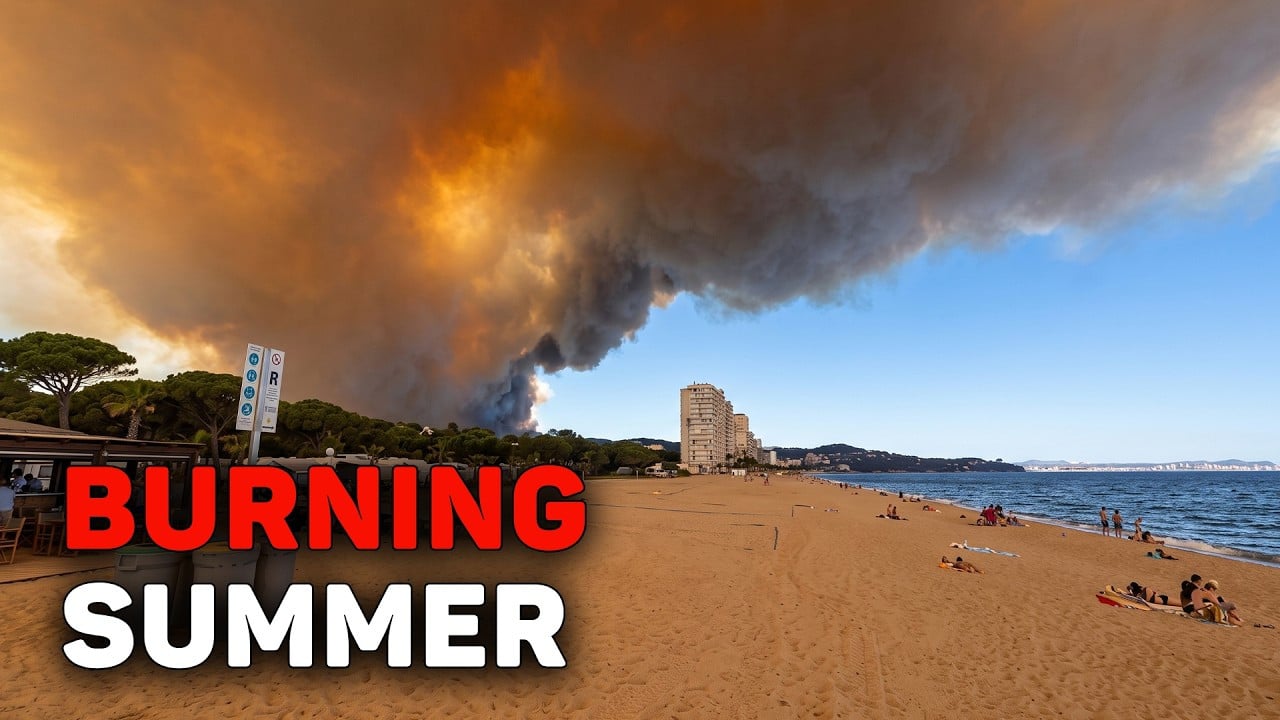
In Europe, megafires have swept across tens of thousands of hectares, forcing the evacuation of hundreds of thousands of people. In France, the flames generated a rare pyrocumulonimbus cloud that affected the outskirts of Bordeaux.
In Chile’s Atacama Desert, four days brought four years’ worth of rainfall, transforming dry canyons into raging torrents that washed away bridges and residential areas. In India, monsoon rains flooded more than 870 villages in the state of Assam, raising the Brahmaputra River to historic levels. In China’s Chongqing, a massive rockfall with a volume of 18,000 cubic meters struck residential buildings and sections of coastal roads.
Waves of extreme precipitation, rockfalls, and large-scale wildfires across different continents formed a single chain of energy redistribution — this is an analysis of the major climate events from July 13 to 26, 2026.
Time codes:
00:00 Introduction
00:22 China: massive rockfall in Chongqing and evacuation of settlements
02:05 Afghanistan: monsoon floods and infrastructure destruction in Nuristan
04:02 Chile: extreme rainfall in the Atacama Desert and a tornado in the Ñuble Region
07:36 India: record floods in Assam and Gujarat
10:12 Europe: megafires in Spain, France, and Italy
14:54 Conclusions: synchronization of fire danger and adaptation of response systems
Research published in 2026 points to a profound shift in the nature of wildfire risk in Europe. Extreme conditions are developing simultaneously across several countries due to the combination of prolonged heat, precipitation deficits, and severely dried vegetation.
This creates critical pressure on mutual assistance mechanisms, as aerial firefighting resources and specialists are required in multiple locations at the same time.
An analysis of more than 11,000 summer wildfires shows that very large fires and megafires account for less than 7% of all events, yet they are responsible for more than half of the total burned area. Under conditions favorable for fire spread, these events rapidly increase in intensity and exceed the capabilities of traditional firefighting methods.
Understanding the physical mechanisms behind these processes requires every person to assess risks appropriately and take preventive action in advance, as protecting human life remains the absolute priority in a changing environment.
Stay informed about events happening around the world.
Publication of this material provides an opportunity for open discussion and does not in itself imply institutional endorsement, confirmation, or scientific verification of the views expressed. The material does not constitute an official statement, expert opinion, or professional advice.