
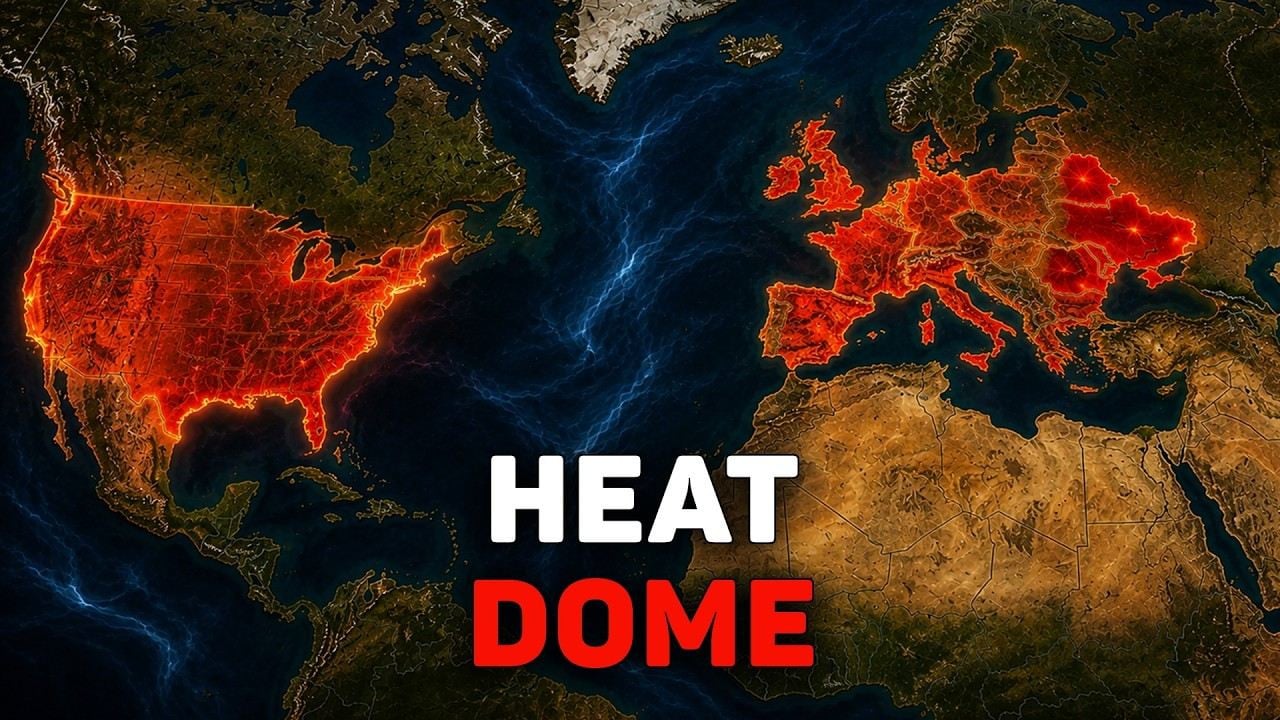
The heat dome over the United States affected more than 200 million residents during the celebrations of the 250th anniversary of independence, with the heat index reaching 46°C in some areas. In New Jersey, the heat wave claimed 25 lives. Belarus recorded a national temperature record: in the city of Pinsk, the air temperature rose to +40.4°C, while nighttime temperatures met the criteria for tropical nights. In Lviv, temperature records were broken for six consecutive days before the overheated atmosphere was released through powerful storms.
In Romania, after 40-degree heat, Bucharest received a month’s worth of rainfall within just a few hours, causing flooding in the metro system and halting surface transport, while in the Bucegi Mountains lightning struck a group of tourists. In Uzbekistan, where July is traditionally dry, thunderstorms with heavy rain and hail occurred, causing the Zarafshan River to wash away a railway embankment for the first time in 20 years. In the United States, near Highmore, a straight-line wind gust reached 211 km/h, while in Ukraine a thunderstorm front brought down hundreds of trees along the route from Lviv to Kyiv.
Extreme heat waves, record-breaking downpours, and destructive squalls across different continents formed a single chain of energy redistribution processes — this is an analysis of the main climate events from June 29 to July 5, 2026.
Time codes:
00:00 Introduction
00:24 Ukraine and Romania: thunderstorm fronts, flooding, and lightning strikes
04:44 Belarus: national temperature record and the aftermath of severe windstorms
06:34 Uzbekistan: unseasonal heavy rain, hail, and flooding on the Zarafshan River
08:33 United States: heat dome, extreme heat, and a record wind gust in South Dakota
12:40 Conclusions: the impacts of heat waves and adapting to a changing climate
According to meteorological services, heat is the deadliest weather phenomenon in the United States, claiming hundreds of lives each year and surpassing floods and tornadoes in terms of fatalities. The key risk factor lies not in peak daytime temperatures, but in the structure of the heat wave itself, when high temperatures persist for several days in a row and continue overnight, preventing the body from recovering.
In urban areas, this process is greatly intensified by the “urban heat island” effect: concrete and asphalt absorb solar energy and gradually release it during nighttime, maintaining continuous heat stress.
Statistics show a steady increase in the duration and frequency of such periods, requiring a systematic review of safety approaches. The development of accurate forecasting systems, the creation of cooling centers, and timely public alerts are becoming critically important measures to minimize risks and protect people’s health in changing environmental conditions.
Stay informed about events happening around the world.
Publication of this material provides an opportunity for open discussion and does not in itself imply institutional endorsement, confirmation, or scientific verification of the views expressed. The material does not constitute an official statement, expert opinion, or professional advice.