
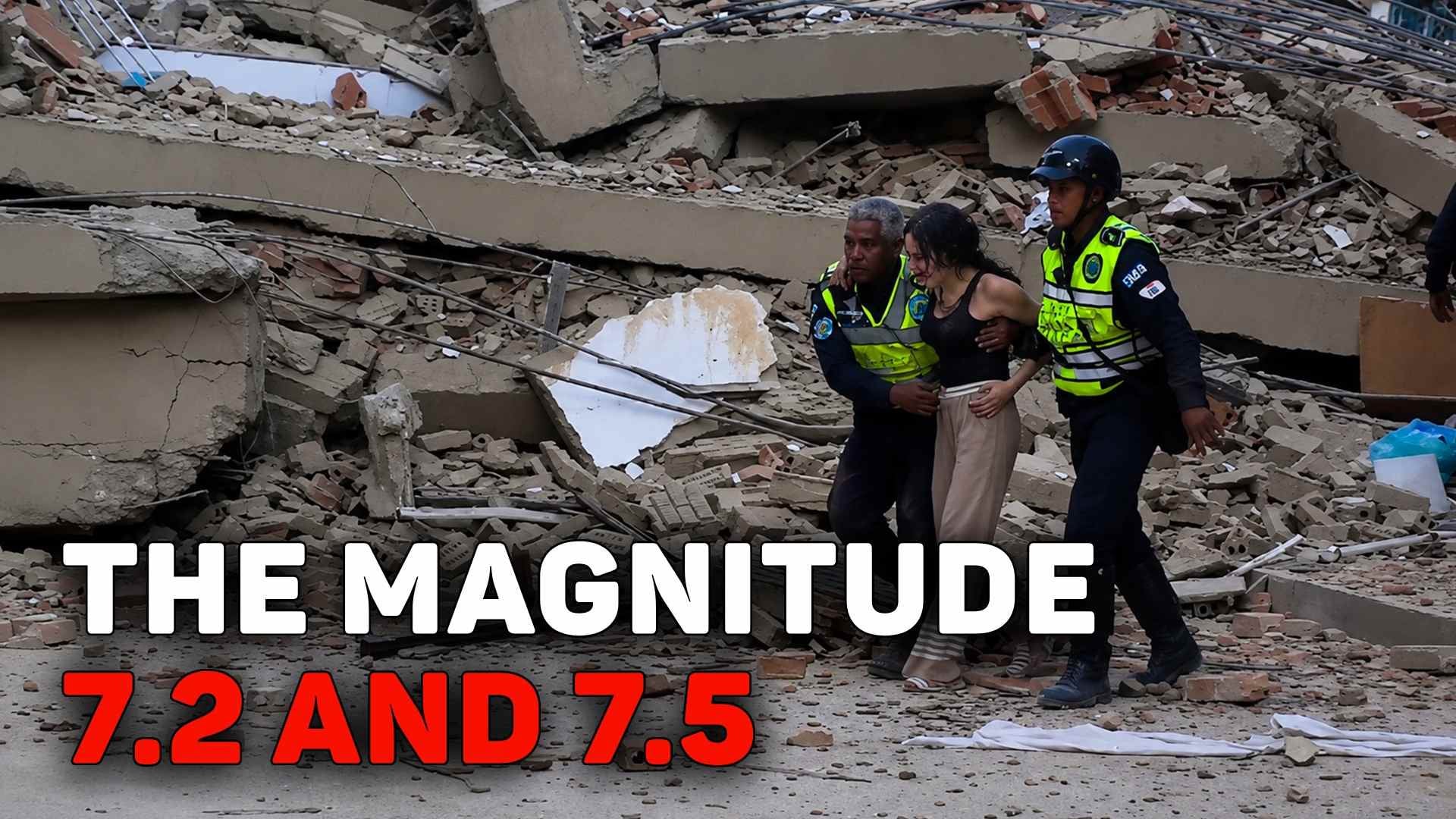
The magnitude 7.2 and 7.5 earthquakes that struck less than a minute apart in Venezuela marked the country's most severe seismic episode in the past 125 years. In Japan, a powerful magnitude 7.2 earthquake was recorded off the coast of Iwate Prefecture, followed by a magnitude 5.6 earthquake in Yamanashi Prefecture.
Europe experienced the most intense heat wave on record, with thousands of temperature records broken and temperatures exceeding 40°C in some areas. In Russia's Ural region, a powerful IF3 tornado swept through the area — an extremely unusual event for this part of the country.
The concurrence of diverse climatic and geodynamic events — from major earthquakes to extreme temperature anomalies — highlights an ongoing reorganization of planetary systems. This is a chronicle of climatic events and geophysical activity during the period from June 22 to June 28, 2026.
Time codes:
00:00 Introduction
00:18 Russia: Powerful IF3 tornado in the Ural region
02:17 Japan: Magnitude 7.2 earthquake in Iwate and magnitude 5.6 earthquake in Yamanashi
06:02 Europe: Historic heat wave with thousands of temperature records broken
07:06 France: Heat burst in Morbihan, temperatures exceeding 44°C
08:42 United Kingdom: Red warning for extreme heat and disruptions to healthcare services
11:45 Venezuela: Twin magnitude 7.2 and 7.5 earthquakes causing widespread destruction
15:03 Conclusions: Infrastructure vulnerability and the need to reassess safety standards
The events of this week show that existing safety standards no longer always match the level of real-world natural hazards. When buildings collapse, hospitals are unable to function because of extreme heat, railway tracks buckle under high temperatures, and strong winds bring down power grids, the issue is not only the force of nature but also the adequacy of preparedness.
As natural hazards continue to intensify, it is essential not only to strictly enforce existing regulations but also to revise building, public health, transportation, and energy standards so that homes and critical infrastructure are designed to withstand these increasingly severe conditions. The danger arises not only when a disaster strikes, but also when foreseeable climate risks have not been taken into account in advance and safety standards exist only on paper. Understanding the physical processes behind these events is key to understanding what is happening. These changes affect everyone, making a scientific approach to studying our planet an essential priority for society.
Stay informed about the events unfolding around the world.
Publication of this material provides an opportunity for open discussion and does not in itself imply institutional endorsement, confirmation, or scientific verification of the views expressed. The material does not constitute an official statement, expert opinion, or professional advice.