
On July 28, at 4:27 p.m. local time, a powerful magnitude 7.1 earthquake struck the Japanese island of Kyushu. Its focus was located in the Kumamoto area at a depth of about 6 miles. The tremors were felt across a vast territory, from Kyushu to the Hokuriku region.
The maximum seismic intensity of 7 on the Japan Meteorological Agency scale was recorded in the city of Uki and the town of Hikawa.
The earthquake struck during business hours, when employees and customers were inside stores, offices, and shopping centers. During the violent shaking, merchandise fell from shelves, equipment shifted, and people rushed outside, gathering in parking lots and other open areas.
An intense series of aftershocks began almost immediately. By 8 p.m., the Japan Meteorological Agency had recorded 61 perceptible aftershocks, while the zone of seismic activity had expanded to approximately 31 miles. Because their sources were relatively shallow, even moderately strong aftershocks produced intense local shaking.
Many residents were afraid to return home and headed to schools, community centers, and gymnasiums converted into evacuation shelters. Some remained in parking lots or spent the night in their vehicles. By the evening of August 2, 8,480 people were staying in 206 evacuation shelters across 21 cities and towns.
A separate shelter for foreign residents was also opened at the Kumamoto City International Center, where information about the earthquake, aftershocks, and safety procedures was provided in four languages.
The situation was further complicated by extreme heat. Daytime temperatures exceeded 95 degrees Fahrenheit, while nighttime temperatures fell only to between 79 and 82 degrees. In the town of Hikawa, a woman over the age of seventy was found inside a vehicle after she had been too afraid to return home following the evacuation. She is believed to have died from heatstroke.
Severe destruction also occurred at the Nippon Paper Industries mill in the city of Yatsushiro. Production buildings were damaged, and a tall smokestack collapsed. A significant number of fatalities were discovered on the factory grounds.
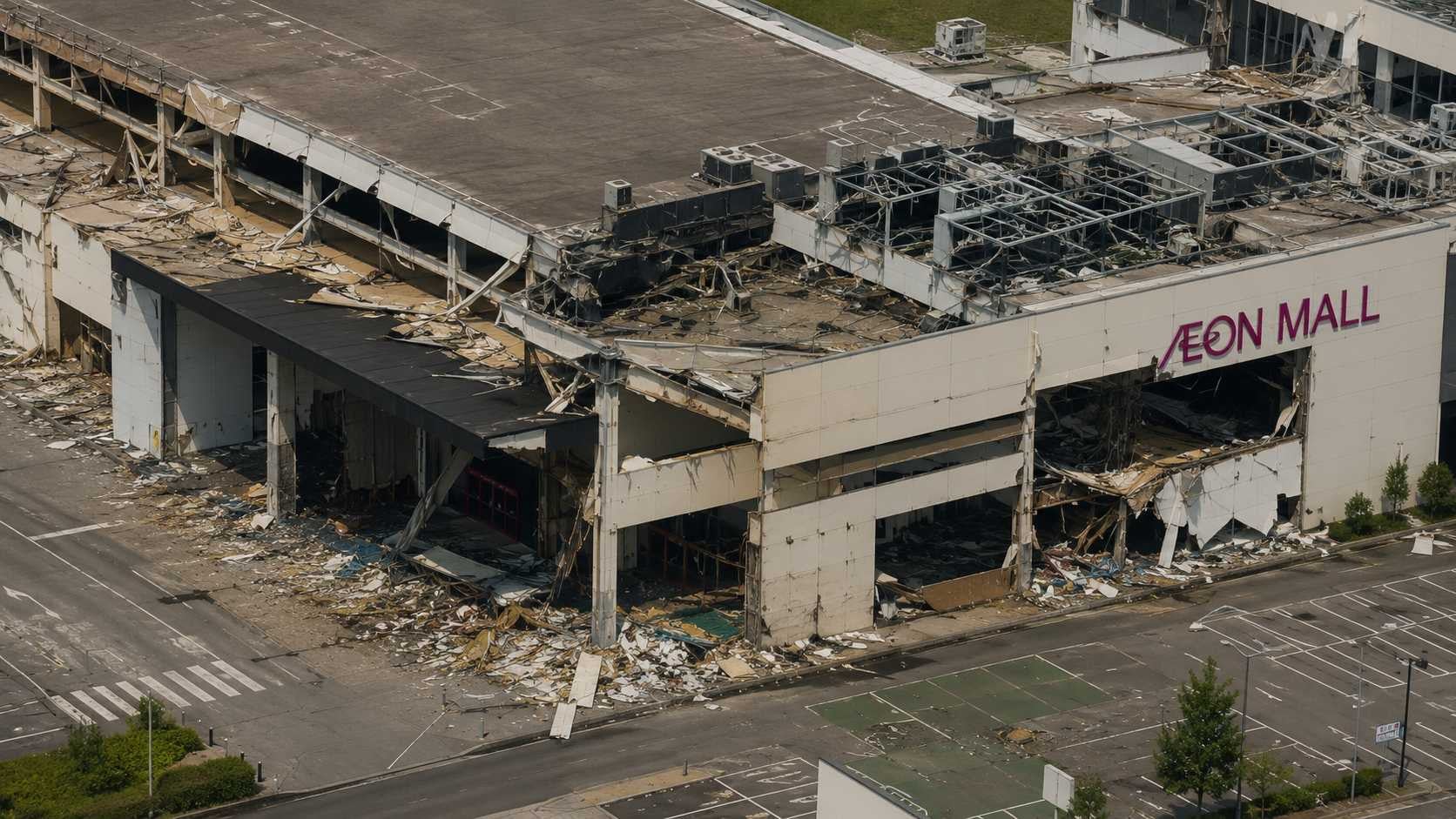
The most tragic episode, however, unfolded at Aeon Mall Kumamoto in the town of Kashima. After the earthquake, a twenty-two-year-old store employee safely reached the parking lot but was instructed to return to the building with a coworker to place the day's proceeds in a safe.
Relatives who encountered her outside the shopping center tried to stop her, but she said she was required to follow management's instructions. Several minutes after the two employees reentered the building, an explosion occurred and part of the structure collapsed. Their bodies were found the following day near the store where they had worked.
According to the preliminary explanation, the earthquake may have damaged gas equipment or connections inside the building, causing a leak of liquefied petroleum gas. Seven people were killed in the explosion.
By August 2, 36 deaths had been confirmed.
A total of 4,213 homes were damaged, including 181 that were completely destroyed.
Utility networks also sustained serious damage. Approximately 46,700 homes in five municipalities were left without running water. In Yatsushiro, damage to gas pipelines forced authorities to suspend service to approximately 9 thousand customers.
Eight sections of roadway remained completely closed. In some places, collapsed buildings blocked the road, hindering emergency operations and the delivery of water and essential supplies.
The effects also extended to coastal areas. Damage was identified at nearly one-third of Kumamoto's fishing ports. Breakwaters, piers, access roads, and facilities used for cultivating edible seaweed were damaged.
As serious natural disasters become increasingly frequent, everyone must understand basic safety rules and be able to assess danger independently. In a critical situation, people should not blindly follow the words or actions of others when they conflict with common sense and established safety procedures. Each person bears primary responsibility for protecting their own life. Human life is the highest value and cannot be compared with any material possession.
Publication of this material provides an opportunity for open discussion and does not in itself imply institutional endorsement, confirmation, or scientific verification of the views expressed. The material does not constitute an official statement, expert opinion, or professional advice.