
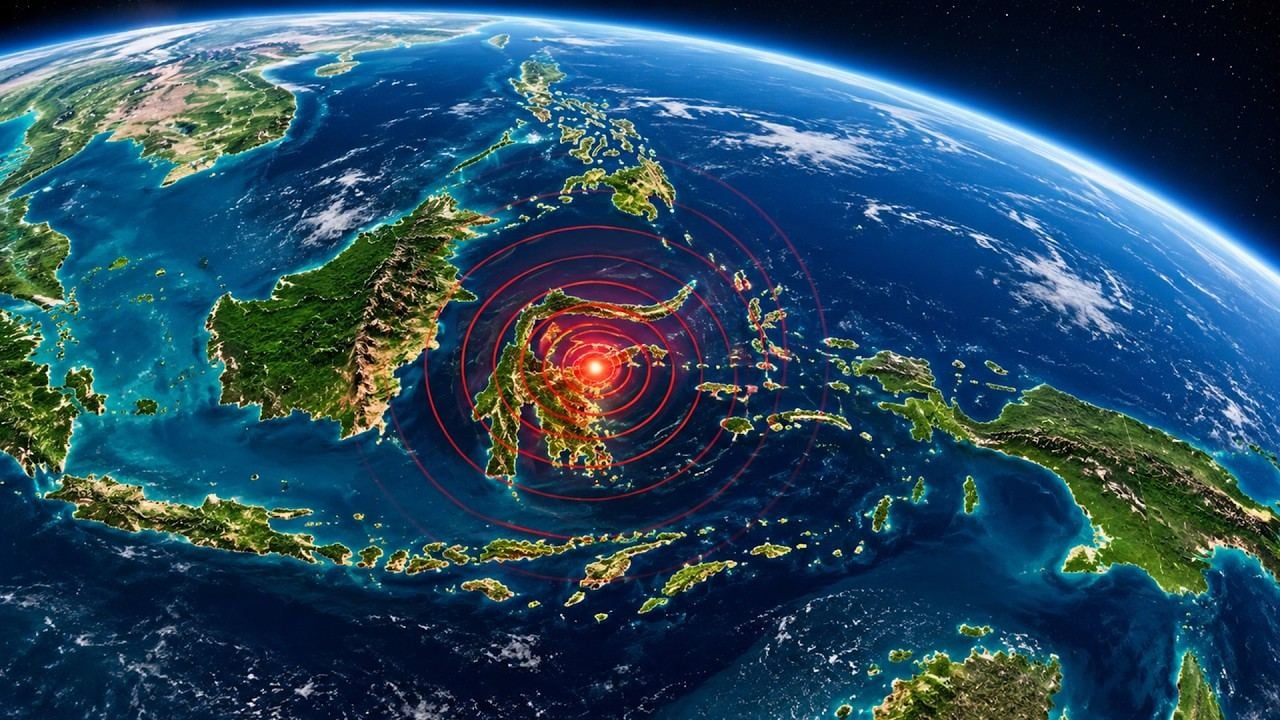
On the morning of June 16, a powerful magnitude 6.7 earthquake struck Central Sulawesi Province in Indonesia. According to Indonesia’s Agency for Meteorology, Climatology, and Geophysics, the seismic event occurred at 10:27 a.m. local time. The epicenter was on land, about 26 miles southeast of Palu, the capital of Central Sulawesi. After further review, specialists reported that the focus was about 10 miles deep.
The earthquake was shallow-focus and was associated with activity along the Sausu Fault. There was no tsunami threat, and monitoring at tide stations did not show any dangerous rise in sea level. However, on land, the tremors caused significant damage in several areas of Central Sulawesi.
The strongest shaking was felt by residents of the Palolo area in Sigi Regency. There, the intensity reached seven on the Modified Mercalli Intensity Scale. This scale does not measure the energy of a seismic event at its source, but shows how strongly the shaking was felt at the surface and what damage it caused in a specific location.
In the first minutes after the earthquake, panic broke out in populated areas. At one hospital in Parigi Moutong Regency, patients were temporarily evacuated from the building. Those who could walk on their own were led outside; others were taken out on stretchers and in wheelchairs. In Sigi Regency, some patients from Torabelo Hospital, including those from the surgical and pediatric wards, were also moved outside or placed in emergency tents in front of the building.
According to the Regional Disaster Management Agency of Sigi Regency, as of June 12, the earthquake’s impact in the regency was extensive. Three people were killed, seventeen were seriously injured, and another one hundred eight suffered minor injuries. In total, the disaster affected eight thousand five hundred eighty-six residents, or two thousand seven hundred seventy-five families.
Specialists urged people in the affected areas to remain vigilant, avoid entering damaged buildings, pay attention to the condition of walls, columns, and floor structures, and follow only official information from local authorities and emergency services.
By Friday, June 19, Indonesia’s meteorological agency had recorded 949 aftershocks that were still shaking the region. The strongest repeated tremors reached magnitudes above 5.
The main earthquake and the subsequent series of aftershocks damaged more than two thousand three hundred homes. Damage was reported not only to residential buildings, but also to government offices, educational facilities, hotels, and medical posts. A mosque, a church, and two Hindu temples were also damaged.
The earthquake triggered cracks in roads and ground movement on slopes. In the Nokilalaki area of Sigi Regency, within Lore Lindu National Park, at least 24 landslide sites were discovered. In four locations, collapsed soil blocked waterways.
During intense downpours, such natural blockages can overflow and break through, sending torrents of water, mud, rocks, and debris rushing downhill. The situation is further complicated by the fact that the dangerous sites are located in a hard-to-reach hilly area of the national park, where any work requires special caution.
The Sigi Regency government declared an emergency response status for fourteen days.
Against the backdrop of increasing seismic activity on the planet and the expanding geography of earthquakes, it is especially important to strengthen monitoring, prevention, and response systems. This applies not only to traditionally earthquake-prone countries such as Indonesia, but also to regions where people have rarely faced such threats before. That is why the exchange of experience between countries is extremely important: they need to use alert, evacuation, earthquake-resistant construction, and rescue-service training systems that have already proven effective in practice, rather than starting from scratch.
Local residents must also know in advance how to act and what they must never do during the main shocks and aftershocks.
Publication of this material provides an opportunity for open discussion and does not in itself imply institutional endorsement, confirmation, or scientific verification of the views expressed. The material does not constitute an official statement, expert opinion, or professional advice.