
On the evening of July 31, the Campi Flegrei supervolcano caldera once again became the center of unusual seismic activity. At 7:46 p.m. local time, an earthquake of magnitude 4.7 struck near the Italian city of Pozzuoli, with its focus at a depth of about 1.9 miles. This was the strongest earthquake recorded since continuous instrumental monitoring began in the caldera area.
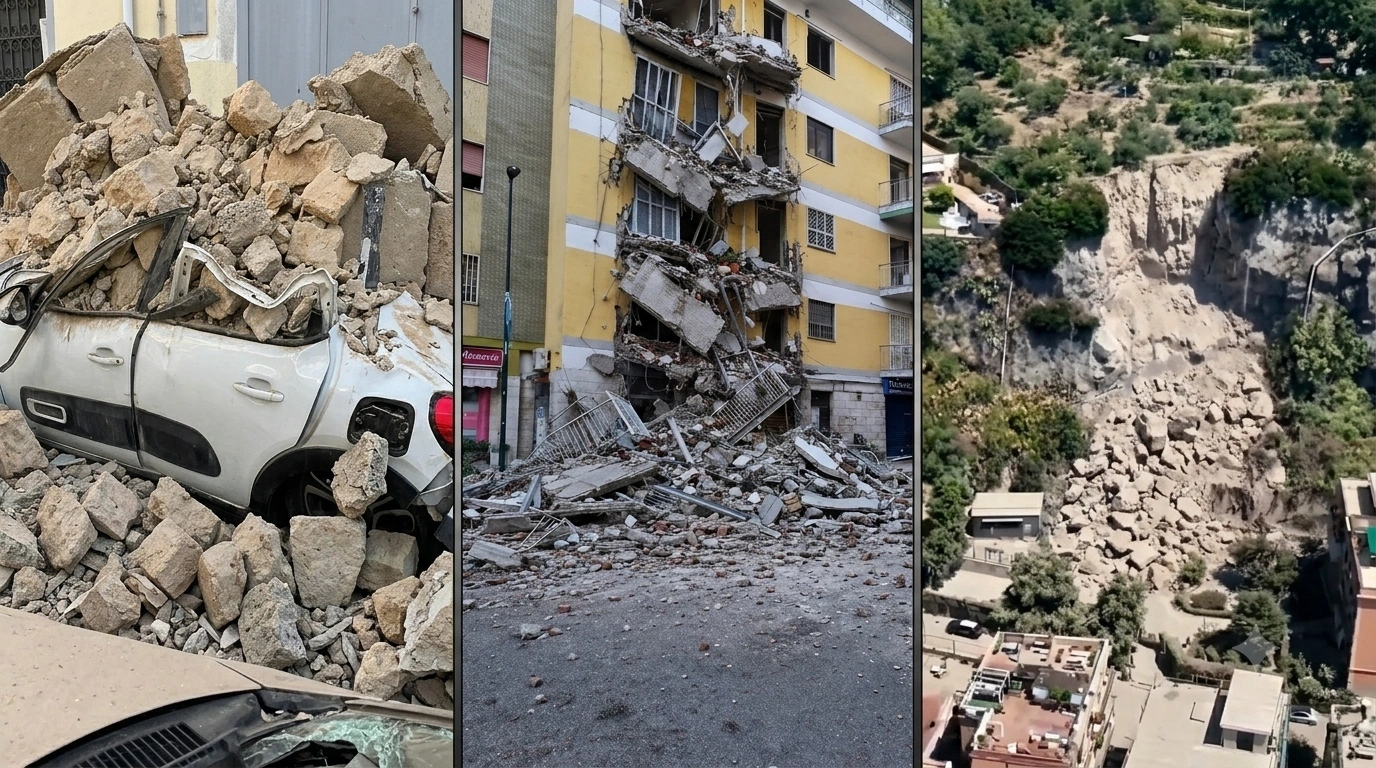
Pozzuoli was the most severely affected. Plaster fell from building facades and cornices, cracks appeared, and doors in some homes became warped and jammed. Several non-residential buildings partially or completely collapsed. Following inspections of the buildings, more than 300 residents were evacuated from the city.
The earthquake was felt throughout most of Naples and its suburbs, as well as on the islands of Ischia and Procida. Frightened residents left buildings in large numbers and rushed into the streets. Many later decided not to return home and spent the night outdoors or in their cars.
One of the most dangerous consequences was the collapse of tuff slopes. Large blocks of rock fell onto roads and parked vehicles, crushing several cars. A married couple was inside one of the vehicles and miraculously survived.
Serious transportation disruptions also occurred. Deep cracks appeared on the access roads to the piers at the Port of Pozzuoli, forcing authorities to temporarily suspend its operations. More than 40 daily ferry and high-speed vessel services connecting the mainland with Ischia and Procida were canceled. In Naples, service on some railway lines and the metro, including high-speed rail connections, was temporarily suspended as a safety precaution.
In the Agnano area, equipment on a high-voltage power line was damaged. Power outages affected about 100,000 customers, after which electricity supplies began to be restored through a backup network.
As of August 1, at least 26 people had been injured in the earthquake. Five remained in the hospital, and two were in serious condition.
Follow official reports on seismic and volcanic activity in the region. In areas with elevated geological risk, it is important to know evacuation routes and emergency service recommendations in advance. Stay alert to changes in the situation and be prepared for possible emergencies.
Publication of this material provides an opportunity for open discussion and does not in itself imply institutional endorsement, confirmation, or scientific verification of the views expressed. The material does not constitute an official statement, expert opinion, or professional advice.