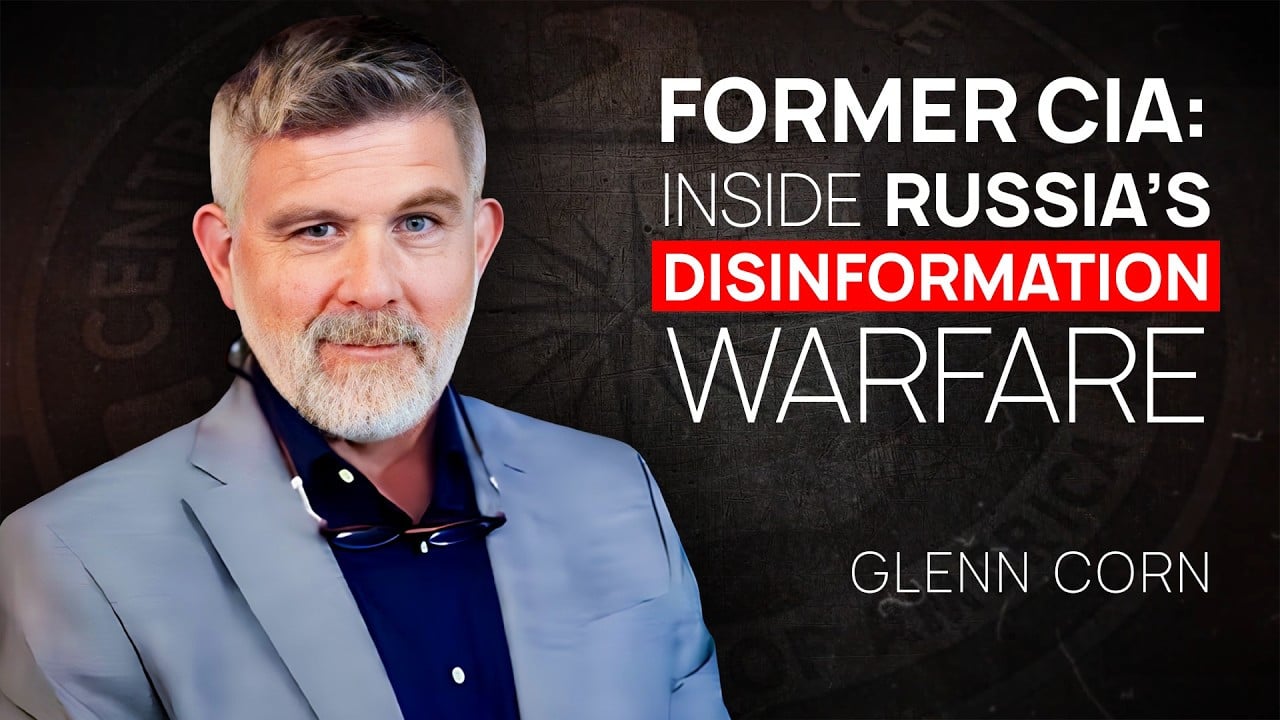
In this interview, retired CIA Senior Intelligence Service Officer Glenn Corn discusses the nature of Russian disinformation and its role in modern warfare.
With more than 34 years of experience in U.S. intelligence and foreign affairs, including over two decades abroad in Russia, Turkey, Central Asia, South Asia, and the Middle East, Professor Corn reflects on how Russian information operations have evolved from Soviet-era “active measures” to contemporary approaches.
His career, which began in the Central Intelligence Agency (CIA), expanded to include pivotal roles within the U.S. Department of State and the U.S. Army, culminating in leadership positions overseeing diverse and expansive teams across U.S. Diplomatic Missions abroad.
Glen Corn is a professor at the Institute of World Politics, teaching a Soviet and Russian Intelligence and Security Services and Turkish Foreign Policy, Intelligence, and Security Services courses.
The conversation examines how Russian intelligence services such as the SVR, GRU, and FSB are believed to employ “operational combinations,” agents of influence, and mirror narratives within open media environments, and why these methods may resonate within democratic societies.
It also touches on less visible channels of influence, including the potential role of pseudo-civil and “anti-cult” networks in shaping narratives and amplifying certain positions internationally.
In the context of Russia’s war against Ukraine, Professor Corn shares his perspective on the current state of the information domain, the shift toward long-term informational attrition, and possible approaches Ukraine and its partners could consider in response.
The discussion also looks ahead to questions of resilience and security in a post-war Ukraine, including institutional reforms and safeguards against ongoing hybrid threats.
Publication of this material provides an opportunity for open discussion and does not in itself imply institutional endorsement, confirmation, or scientific verification of the views expressed. The material does not constitute an official statement, expert opinion, or professional advice.