
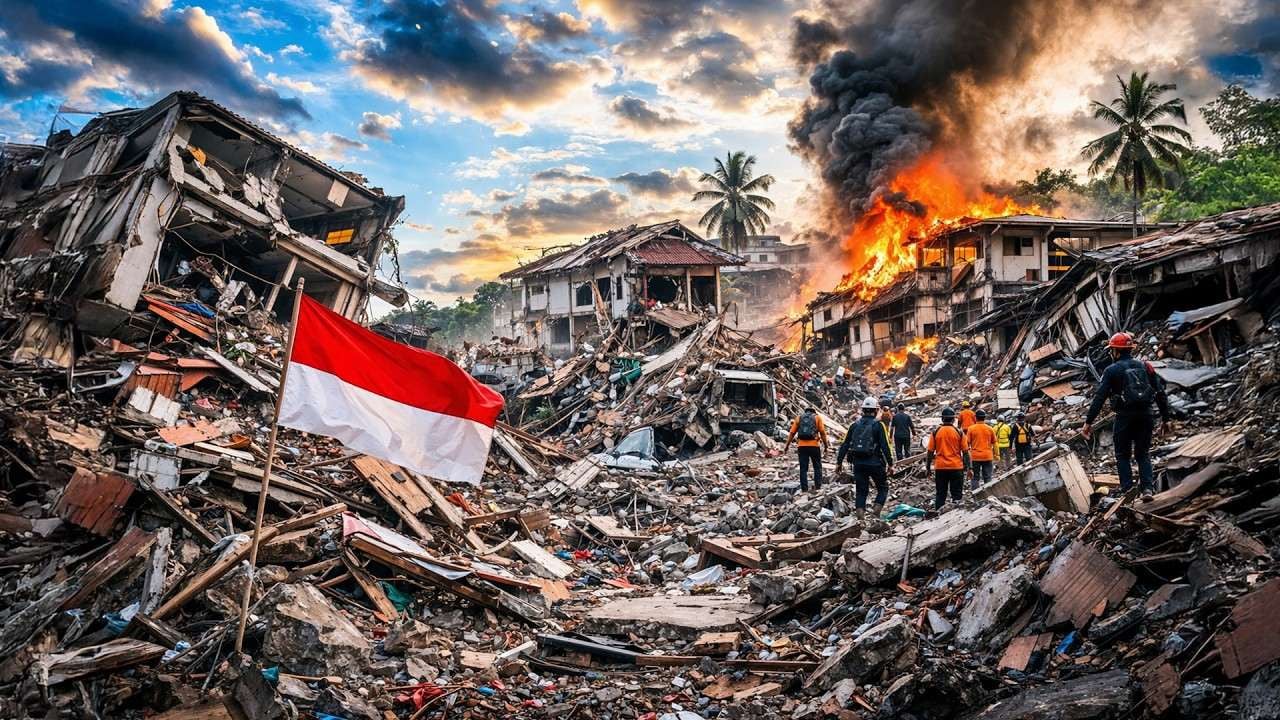
In the early morning of April 2, a powerful earthquake with a magnitude of 7.6 struck northeastern Indonesia. The epicenter was located in the waters of the Molucca Sea, approximately 80 miles southeast of the city of Bitung in North Sulawesi Province, at a depth of about 38.5 miles.
The earthquake was felt most strongly in three provinces: North Maluku, North Sulawesi, and Gorontalo.
The tremors were brief but extremely intense. In Bitung and its surrounding areas, they lasted between ten and twenty seconds, while in Manado they continued for more than a minute. This was enough to cause panic: people rushed out of their homes, traffic came to a halt in the streets, and furniture toppled as building structures cracked.
The disaster claimed at least one life. In Minahasa Regency, North Sulawesi Province, a seventy-year-old woman was killed when debris from a building collapsed on her during the shaking. Several other people were injured, including individuals who suffered fractures while attempting to escape.
The first hours after the main shock were accompanied by a series of aftershocks. By seven o’clock in the morning, two noticeable tremors with magnitudes of 5.5 and 5.2 had already been recorded. Their number continued to grow rapidly. According to the Meteorology, Climatology, and Geophysics Agency (BMKG), at least nine hundred sixty aftershocks were registered in total, twenty-two of which were felt by the population. Their magnitudes ranged from 1.7 to 5.8.
The earthquake also triggered a small tsunami. Waves were recorded in at least nine areas, with the highest reaching approximately two and a half feet in North Minahasa.
The damage was localized but significant. In the city of Ternate, light to moderate destruction was reported: a church in the Pulau Batang Dua district was affected, and at least two residential houses were damaged in Ganbesi. In Bitung, destruction impacted several districts, including Maesa, Matuari, Madidir, and Lembeh Utara.
In a number of buildings, walls collapsed. Administrative structures and religious facilities were also damaged.
Earthquakes of such high magnitude — above 7.0 — have, unfortunately, become increasingly frequent. This represents an extremely dangerous trend: a rise in both the strength and frequency of earthquakes in different parts of the planet.
In a series of scientific video reports, Dr. Egon Cholakian presented forecasts of such developments and provided a comprehensive explanation of why climatic and geodynamic cataclysms are intensifying.
Publication of this material provides an opportunity for open discussion and does not in itself imply institutional endorsement, confirmation, or scientific verification of the views expressed. The material does not constitute an official statement, expert opinion, or professional advice.