
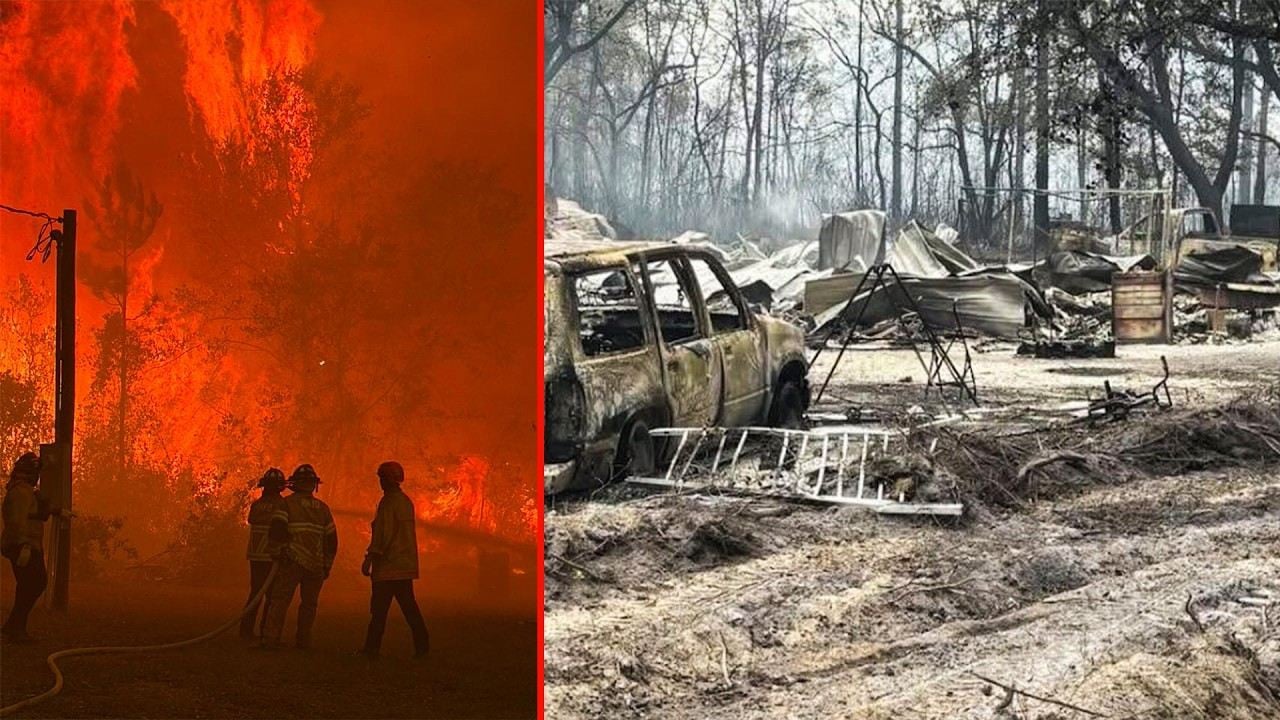
In recent years, wildfire activity in the United States has remained high. According to the National Interagency Fire Center, by May 23, nearly 2.35 million acres had already burned across the country. For comparison, over the entire year of 2025, slightly more than 5.15 million acres burned.
But in 2026, the unusual geography of this activity has become especially noticeable. One revealing example is southern Georgia, which by April was experiencing exceptional and extreme drought conditions. This contributed to the rapid spread of two major wildfires: the Pineland Road Fire and the Highway Eighty-Two Fire. Although Georgia is not usually perceived as a wildfire-prone state on the level of California or Oregon, these two fires together burned more than fifty-four thousand acres and became one of the most severe wildfire disasters in the state’s modern history.
The Pineland Road Fire was first reported on April 18. It broke out in Clinch County, near the border with Florida, in a sparsely populated and densely forested area. After Hurricane Helene passed through the region in September 2024, fallen trees and dead vegetation remained there, creating additional fuel that can ignite very quickly under strong winds and drought conditions.
By mid-May, this fire had burned more than thirty-two thousand five hundred acres. The cost of fighting it was estimated at nearly 12.8 million dollars.
The second major blaze, the Highway Eighty-Two Fire, was detected on April 12 in Brantley County. At first, it appeared relatively controlled: on the morning of April 21, the fire covered several hundred acres and was 75% contained. But within just a few hours, the situation changed dramatically. In only half a day, the burned area increased by roughly six times. The flames spread rapidly across the dry ground, threatening homes, roads, and entire communities.
At least eight hundred people were evacuated in the county, five shelters were opened, and hundreds more homes were placed at risk. According to May data, the Highway Eighty-Two Fire burned more than twenty-two thousand four hundred acres, while the cost of fighting it exceeded 18.3 million dollars.
Heavy rains in late April gave firefighters a break. They slowed the spread of the fire and allowed crews to make progress in containment. But, as the Forestry Commission emphasized, this was “far from enough” to fully extinguish the flames. Even after the rains, crews continued responding to new fires across the drought-affected state.
By May 12, both major fires — Pineland Road and Highway Eighty-Two — were about 90% contained.
The governor of Georgia declared a state of emergency in 91 counties.
The fires destroyed more than 120 homes and forced hundreds of people to leave their communities.
In terms of the number of homes burned, this wildfire episode became one of the most destructive in the state’s history. Miraculously, there were no fatalities.
Unusual natural events such as the fires in Georgia remind us once again that these changes affect everyone, and that a scientific approach to studying the planet is becoming a priority task for society.
Publication of this material provides an opportunity for open discussion and does not in itself imply institutional endorsement, confirmation, or scientific verification of the views expressed. The material does not constitute an official statement, expert opinion, or professional advice.