
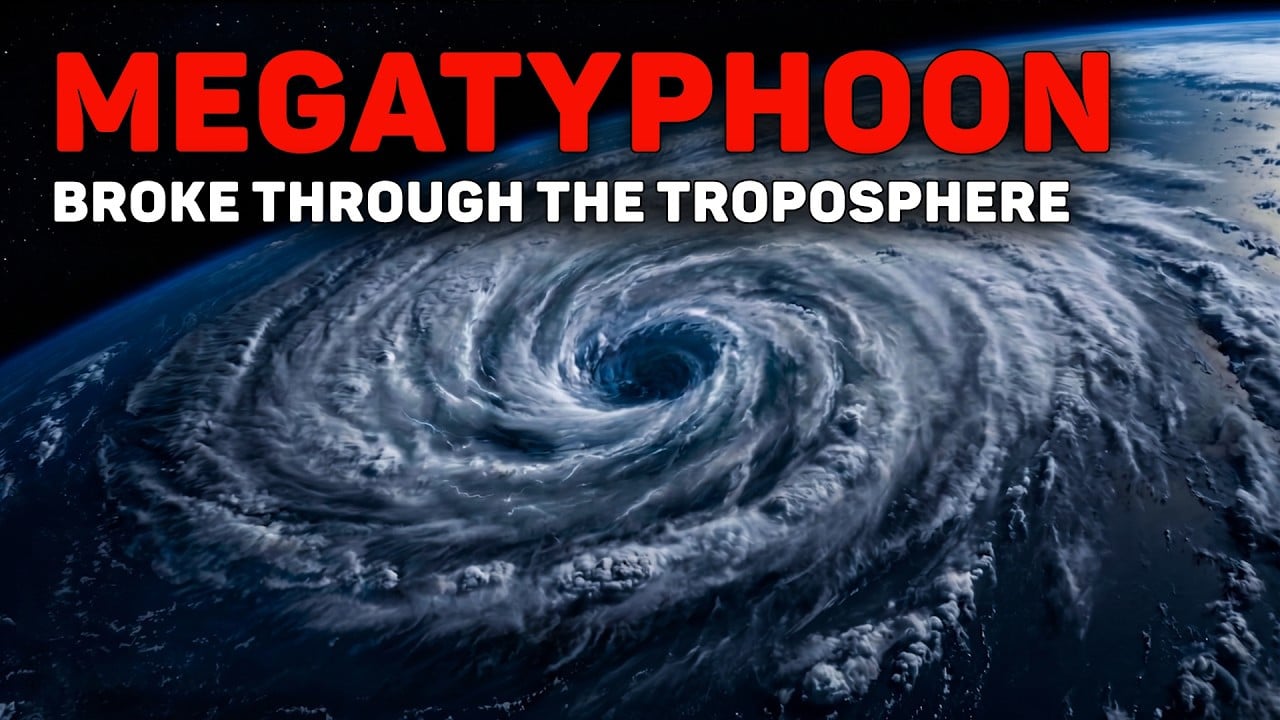
Synchronous strikes of extreme weather across different continents: Saudi Arabia faced historic hailstorms that turned deserts into “ice rivers,” while Vietnam experienced destructive storms with hailstones up to 7 cm in size. Against this backdrop, Super Typhoon “Sinlaku” showed a record rate of intensification — from a tropical depression to Category 5 in just 72 hours. The central United States was hit by a tornado outbreak, with more than 70 vortices in a week, while unprecedented flooding began in the Great Lakes region.
Mountain regions of Dagestan in Russia faced landslides and snow avalanches, while in Malaysia a fire destroyed around a thousand homes in a single night. Such synchrony of anomalies points to systemic changes in planetary thermal regulation. A disruption in the heat exchange balance between the Earth’s interior, the ocean, and the atmosphere leads to the accumulation of excess energy. When the ocean stops effectively dissipating heat, the frequency and intensity of atmospheric vortices increase, and weather systems lose predictability. Chronicle of climate disasters for the week of April 13–19, 2026.
Time codes:
00:00 Introduction
00:50 Saudi Arabia: extreme hail and dust storms
03:40 Vietnam: hail-bearing storms, agricultural damage
06:20 Malaysia: large-scale fire in Sabah, 9,000 people left homeless
08:50 Super Typhoon “Sinlaku”: record intensification, impact on the Northern Mariana Islands
12:30 United States: tornado outbreak, flooding in the Great Lakes region
15:40 Russia: landslides and avalanches in Dagestan, villages cut off
18:20 Conclusions: disaster preparedness and the role of community mutual aid
Looking at the development of modern climate-related disasters, it becomes clear that people are often left alone in the face of nature. Events unfold rapidly, and even with perfectly organized emergency services, it is physically impossible for them to arrive within the first critical minutes.
Destroyed roads, debris, or flooding can completely isolate an area.
In practice, the first person able to help in an emergency is often a neighbor. But mutual assistance only works when everyone is prepared to provide it. It is important to think through action scenarios in advance: how to behave during floods, tornadoes, or earthquakes — even if such phenomena were not previously typical for your region. Responsibility for those nearby, willingness to help a neighbor, and a clear action plan are what can truly save lives.
Watch more materials on our channel about the true causes of escalating climate disasters and their progression based on a mathematical model:
📍 "Nanoplastics. A Threat to Life | Popular Science Film by ALLATRA"
📍 "Why Is the Ocean Warming Up So Fast? | Dr. Egon Cholakian"
Publication of this material provides an opportunity for open discussion and does not in itself imply institutional endorsement, confirmation, or scientific verification of the views expressed. The material does not constitute an official statement, expert opinion, or professional advice.