
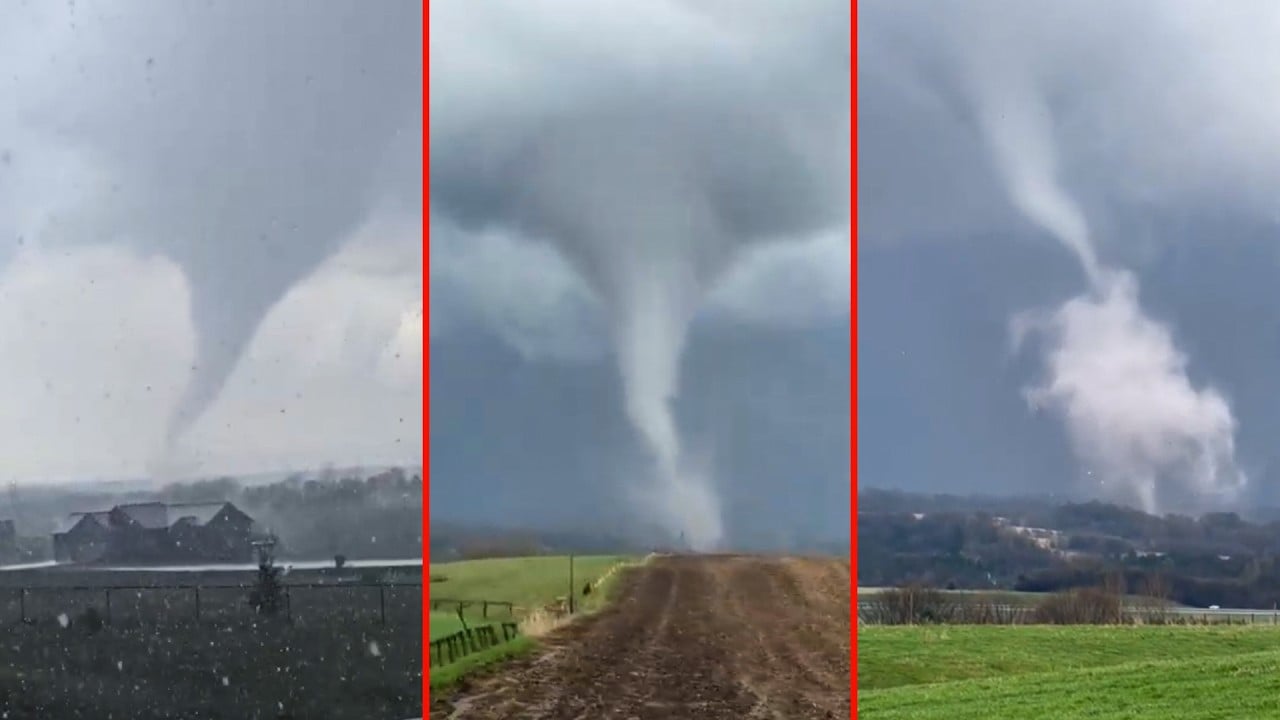
The central states of the United States have been hit by a powerful series of storms. Minnesota, Wisconsin, Illinois, and Missouri were the hardest affected.
The peak of the severe weather occurred on April 17, when a large tornado outbreak took place. A total of 75 tornadoes were recorded, some of which reached EF-3 intensity.
Some of the first impacts were felt in parts of Minnesota. In the vicinity of Rochester, tornadoes moved through residential neighborhoods, destroying buildings and tearing off roofs. In the city of Marion, about thirty homes were damaged, and streets were covered with debris, fallen trees, and structural fragments.
In Wisconsin, in the small town of Ringle, approximately seventy-five homes were damaged by the storm. Some residents became trapped in basements and required assistance from rescue teams. A day earlier, on April 15, in the city of Waukesha, a man was killed by a lightning strike during the storm.
Significant destruction was also recorded in Illinois and Missouri, affecting both residential areas and urban infrastructure. Power lines were damaged, leaving large areas without electricity.
At the same time, the region was hit by large hail, including stones measuring more than 2.8 inches in diameter. Hundreds of such incidents were recorded over the course of the week. The hail shattered cars, windows, and rooftops, compounding the damage caused by the tornadoes.
The most severe consequences were caused by flooding. In the Great Lakes area, especially in Michigan and Wisconsin, prolonged heavy rainfall combined with saturated soil and active snowmelt led to widespread flooding. Rivers overflowed their banks, in some places reaching record levels.
Water levels in the Muskegon River exceeded historical records, forcing the urgent evacuation of residents from floodplain areas downstream of the Croton Dam. Dams came under critical stress: in several locations, water overtopped protective structures, and breaches of earthen dams led to the flooding of residential areas, affecting hundreds of people.
According to officials, this flood was unprecedented. They noted that local residents are accustomed to harsh conditions, but the scale of the disaster exceeded even their ability to cope with such situations.
Each new unprecedented natural disaster is a signal that it is critically important for all people to understand what is happening to the planet and what is driving the increasing frequency and intensity of natural hazards. This topic was explained in detail and in a highly accessible way in a video by Egon Cholakian. https://youtu.be/8WGubs29zGo
Publication of this material provides an opportunity for open discussion and does not in itself imply institutional endorsement, confirmation, or scientific verification of the views expressed. The material does not constitute an official statement, expert opinion, or professional advice.