
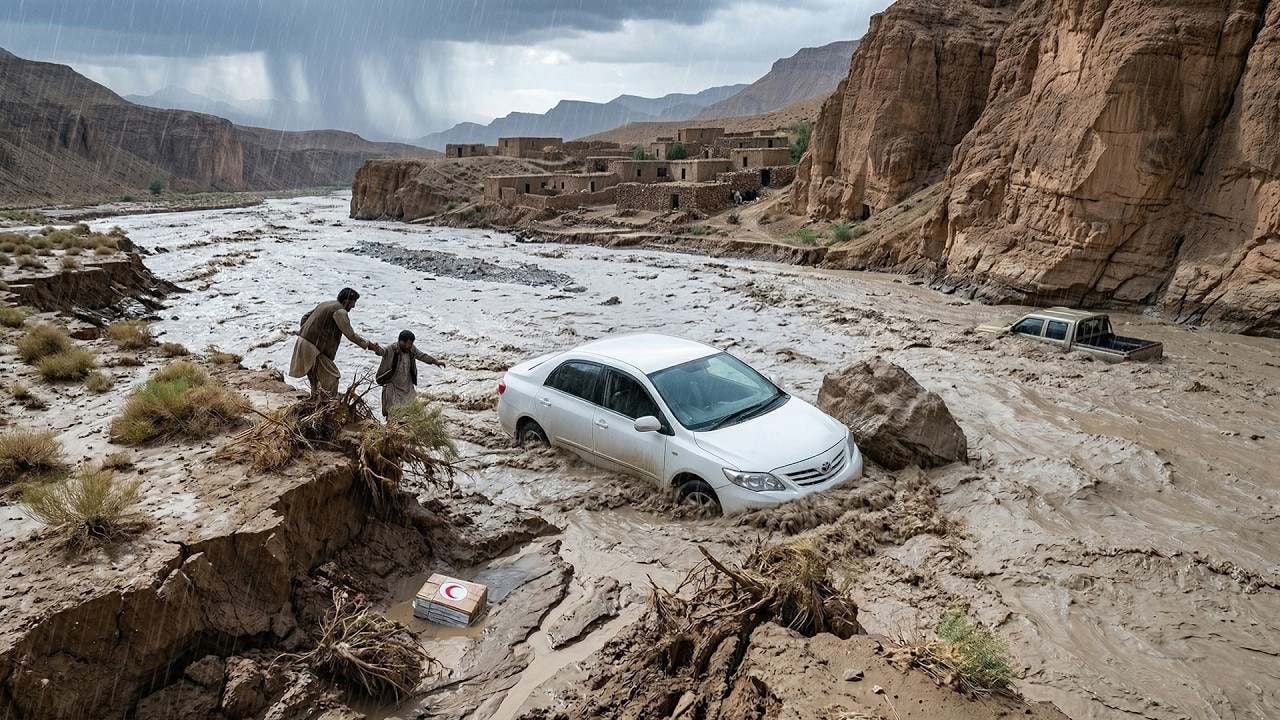
Heavy rainfall that began on March 26 triggered devastating floods across 25 of Afghanistan’s 34 provinces.
In some areas, more than four inches of precipitation fell within a short period. An additional contributing factor was seasonal snowmelt, especially in mountainous regions.
Agriculture suffered severe damage: thousands of acres of farmland were destroyed, around 240 head of livestock died, and in total more than 14,000 acres of agricultural land were affected.
The disaster caused large-scale destruction, with approximately 5,000 residential homes destroyed or damaged. In many areas, water supply systems were also knocked out of service.
In Ghazni Province, a sudden rise in water levels caused a major accident when a passenger bus overturned, killing two people, injuring more than ten others, and leaving one child missing.
The situation was further worsened by abnormal weather events. Starting April 2, heavy snowfall occurred in several provinces, including Zabul, Ghazni, and Maidan Wardak — an extremely unusual phenomenon for this time of year.
Snow covered blossoming fruit trees and already sprouted crops that were in an active growth stage. In southern Zabul Province, where the climate is typically hot and dry, snow depth locally reached up to about thirty inches.
At the same time, heavy rain and snowfall caused serious disruptions to transportation networks. More than 217 miles of roads were flooded, and landslides and rockfalls forced the closure of the strategic Kabul–Jalalabad highway.
As of April 5, the disaster had claimed at least 99 lives nationwide, with another 154 people injured.
On April 3, a magnitude 5.8 earthquake struck the country. The epicenter was located in the Hindu Kush mountain range, approximately 93 miles east of the city of Kunduz. The hypocenter lay at a depth of about 112 miles, which expanded the area where shaking was felt.
Seismic tremors were felt across a wide region, including Afghanistan, western Pakistan, and India, including the capital, New Delhi.
In Afghanistan, at least five homes were destroyed and another 33 were severely damaged, affecting around 40 families across the provinces of Kabul, Panjshir, Logar, Nangarhar, Laghman, and Nuristan.
According to authorities, the death toll reached at least 12 people, with four others injured. In one district of Kabul, a residential house collapsed while a refugee family was inside. Eight people were killed, and one child aged around two to three years survived. The child was injured and hospitalized.
Natural disasters have become more frequent, and many regions are now experiencing cascading chains of extreme events. What amplifies these catastrophes — and often acts as a triggering mechanism — can be learned from the video “Why Is the Ocean Warming Up So Fast?”
Publication of this material provides an opportunity for open discussion and does not in itself imply institutional endorsement, confirmation, or scientific verification of the views expressed. The material does not constitute an official statement, expert opinion, or professional advice.