
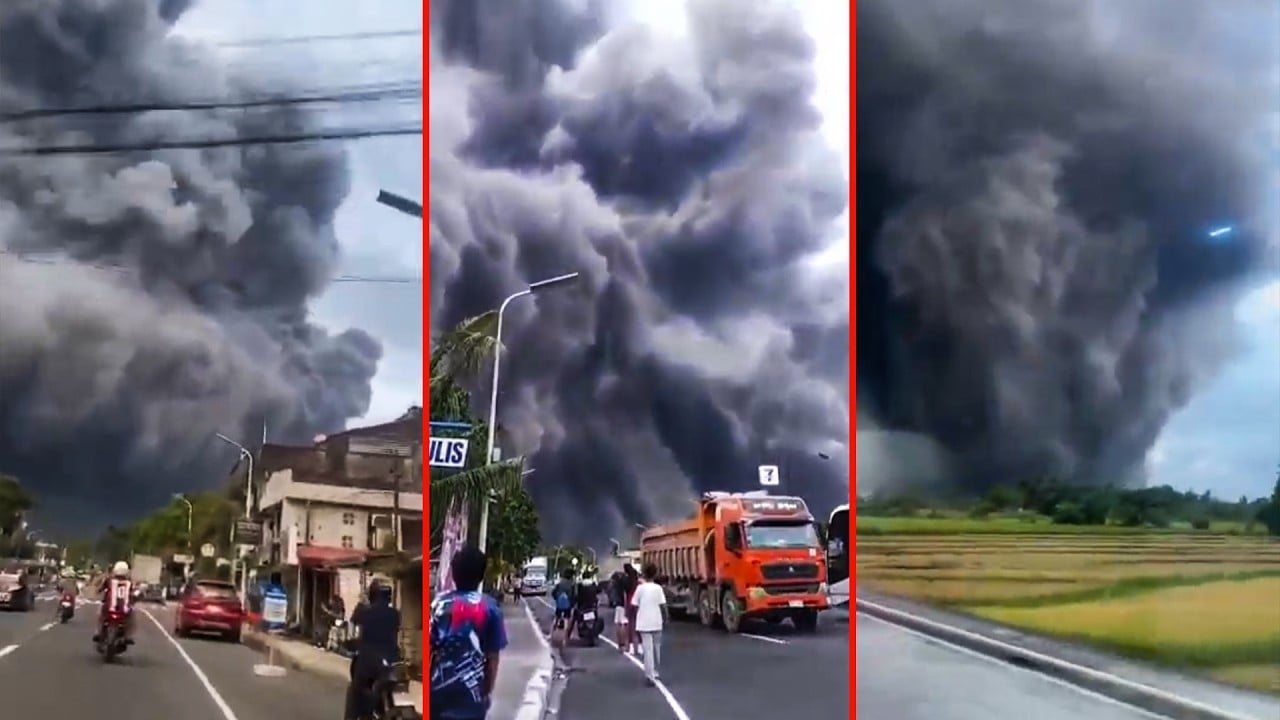
Mayon Volcano in the Philippines has once again reminded people of its dangerous power through a series of alarming events that changed life in Albay Province in just a few days. According to the National Disaster Risk Reduction and Management Council, the first signs of unrest were recorded on about May 2, between 12:40 and 12:45 a.m.: the volcano ejected pyroclastic material, while rockfalls and ashfall were also observed.
The main episode of activity occurred at around 3:33 a.m. Specialists recorded lava effusion, 284 rockfalls, and 14 pyroclastic density current signals. The volcano released about 3,497,000 pounds of sulfur dioxide. 32 volcanic earthquakes were also registered, including 25 tremors lasting from two to fifteen minutes.
Because of the continuing activity, authorities were forced to organize road-clearing operations, evacuate residents, and impose flight restrictions. The Civil Aviation Authority of the Philippines issued a safety warning after the eruption on May 2: aircraft were prohibited from flying at altitudes of up to 11,000 feet within a radius of about 3.7 miles from the volcano’s summit.
On Sunday, May 3, the consequences of the eruption became especially visible to local residents. On Maharlika Highway in Camalig, visibility dropped almost to zero. According to the Office of Civil Defense, ashfall affected at least 52 villages in Albay Province.
Residents were advised to stay indoors, while those who needed to go outside were urged to wear masks to avoid respiratory problems.
Agriculture also suffered serious damage. More than fifty-nine acres of farmland in Camalig were completely destroyed, and some areas in Guinobatan were partially damaged. Several farm animals died.
Against the backdrop of the widespread impact, a state of calamity was declared in a number of municipalities in Albay.
The Philippine Space Agency, PhilSA, provided an additional picture of the damage. It prepared a map of the areas affected by ashfall after a pyroclastic density current on Mayon Volcano. According to the analysis, ash covered about 21,113 acres.
The Philippine Institute of Volcanology and Seismology kept Mayon at Alert Level III. This means that volcanic unrest remains intense and magmatic in nature, while the possibility of a more powerful eruption persists.
In the Philippines, as on the planet as a whole, volcanic activity is rising in a synchronized pattern. This is not a random coincidence, but a natural consequence of the activation of magmatic processes deep within the planet in recent years. Everyone needs to know about this, because it represents a potential danger even for regions where volcanic eruptions have never occurred. Watch the video by Dr. Egon Cholakian, in which he explains the processes now taking place, and you will see this for yourself.
https://youtu.be/8WGubs29zGo
Publication of this material provides an opportunity for open discussion and does not in itself imply institutional endorsement, confirmation, or scientific verification of the views expressed. The material does not constitute an official statement, expert opinion, or professional advice.