Every weather forecast begins long before an icon appears on your phone. Behind each prediction lies a vast global system of satellites, sensors, data centers, supercomputers, and decades of scientific research working together to observe our living planet.
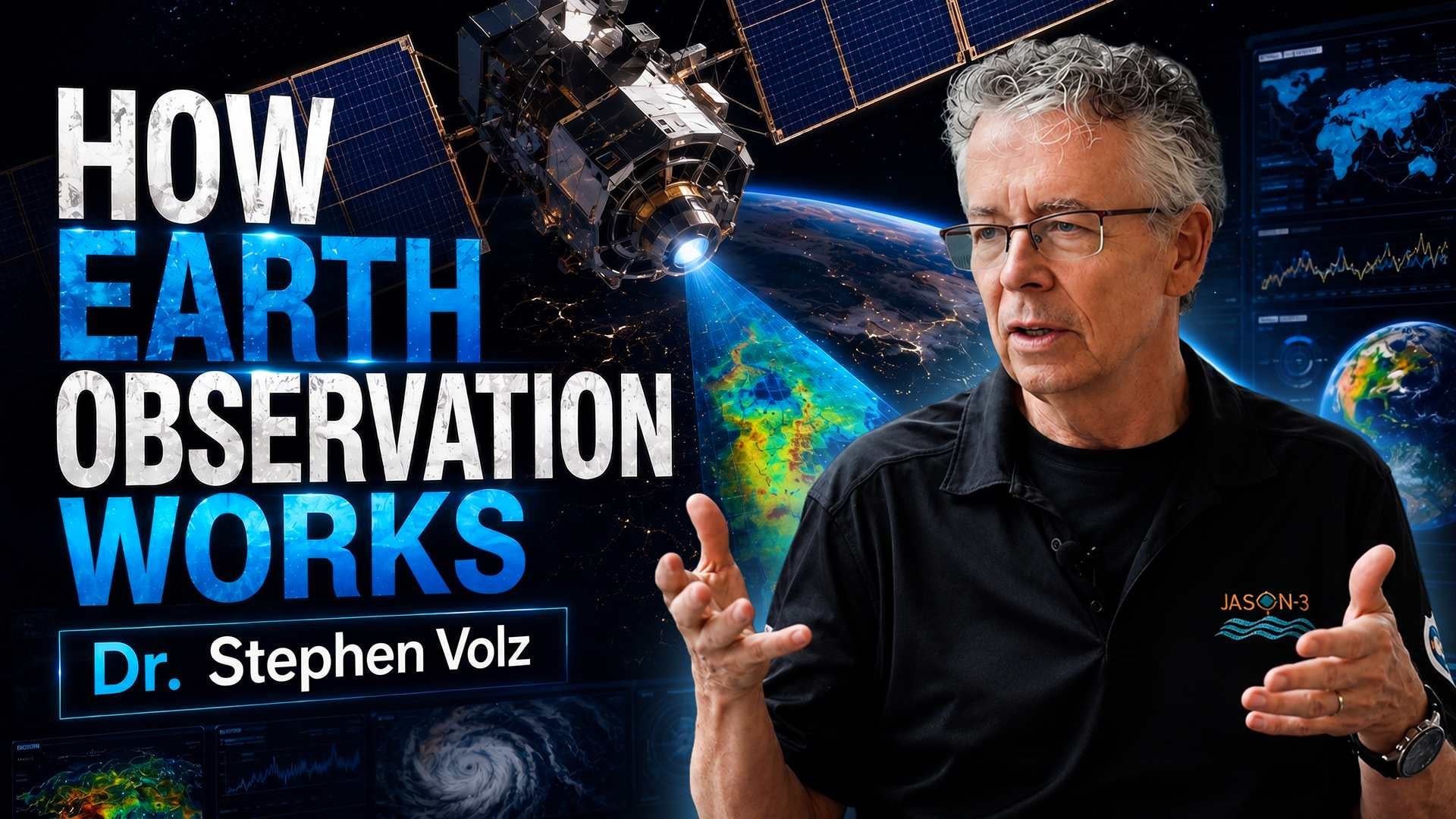
In this episode of the ALLATRA Podcast in collaboration with ALLATRA Global Research Center, Dr. Stephen M. Volz shares insights from decades of leadership in NASA and NOAA. As former Associate Director of NASA's Earth Science Flight Program and former Assistant Administrator of NOAA's National Environmental Satellite, Data, and Information Service (NESDIS), he helped build and oversee the systems that monitor our planet from space.
Drawing on decades of experience in NASA and NOAA, Dr. Volz explains how humanity has transformed its ability to observe Earth, from studying individual atoms and the origins of the universe to managing constellations of satellites that continuously monitor our planet. He shares why Earth should be understood not as separate oceans, atmosphere, and land, but as one interconnected living system.
The conversation explores how satellite observations become weather forecasts, why climate prediction is far more complex than it seems, how artificial intelligence is reshaping Earth observation, and why human expertise remains irreplaceable. Dr. Volz also discusses the critical role of oceans in Earth's climate system and why understanding our planet is one of humanity's greatest scientific challenges.
In this episode:
• How satellites observe Earth from space
• How weather forecasts are created
• Weather forecasting vs. climate prediction
• The role of oceans in Earth's climate
• AI in Earth observation: opportunities and limits
• Why human expertise still matters
• The future of Earth observation
The podcast is hosted on the ALLATRA platform.
This material is for informational and discussion purposes only. The statements, assessments, interpretations, conclusions, and hypotheses contained herein represent the personal views of their authors as of the date of publication and do not constitute an official position of the ALLATRA or any other public association, organization, project, partner, affiliated entity, or individual unless explicitly stated otherwise.
Publication of this material is intended to encourage open scientific dialogue and does not in itself imply institutional endorsement, confirmation, or scientific verification of the views expressed. The material should not be interpreted as an official statement, expert opinion, or professional advice.
0:00 NASA, Satellites, and Our Changing Planet
1:48 How Dr. Volz Sees Our Planet
5:55 How a Weather Forecast Reaches Your Phone
11:40 What Satellites Actually See
17:55 The Satellites We Cannot Afford to Lose
20:17 Weather Forecasts vs. Climate Predictions
25:24 What Record Ocean Heat Is Telling Us
29:16 What AI Can and Cannot Do for Forecasting
37:48 Why Weather Data Should Stay Public
41:36 How Satellites Protect Human Health
47:51 Why Global Weather Data Sharing Matters
Publication of this material provides an opportunity for open discussion and does not in itself imply institutional endorsement, confirmation, or scientific verification of the views expressed. The material does not constitute an official statement, expert opinion, or professional advice.