
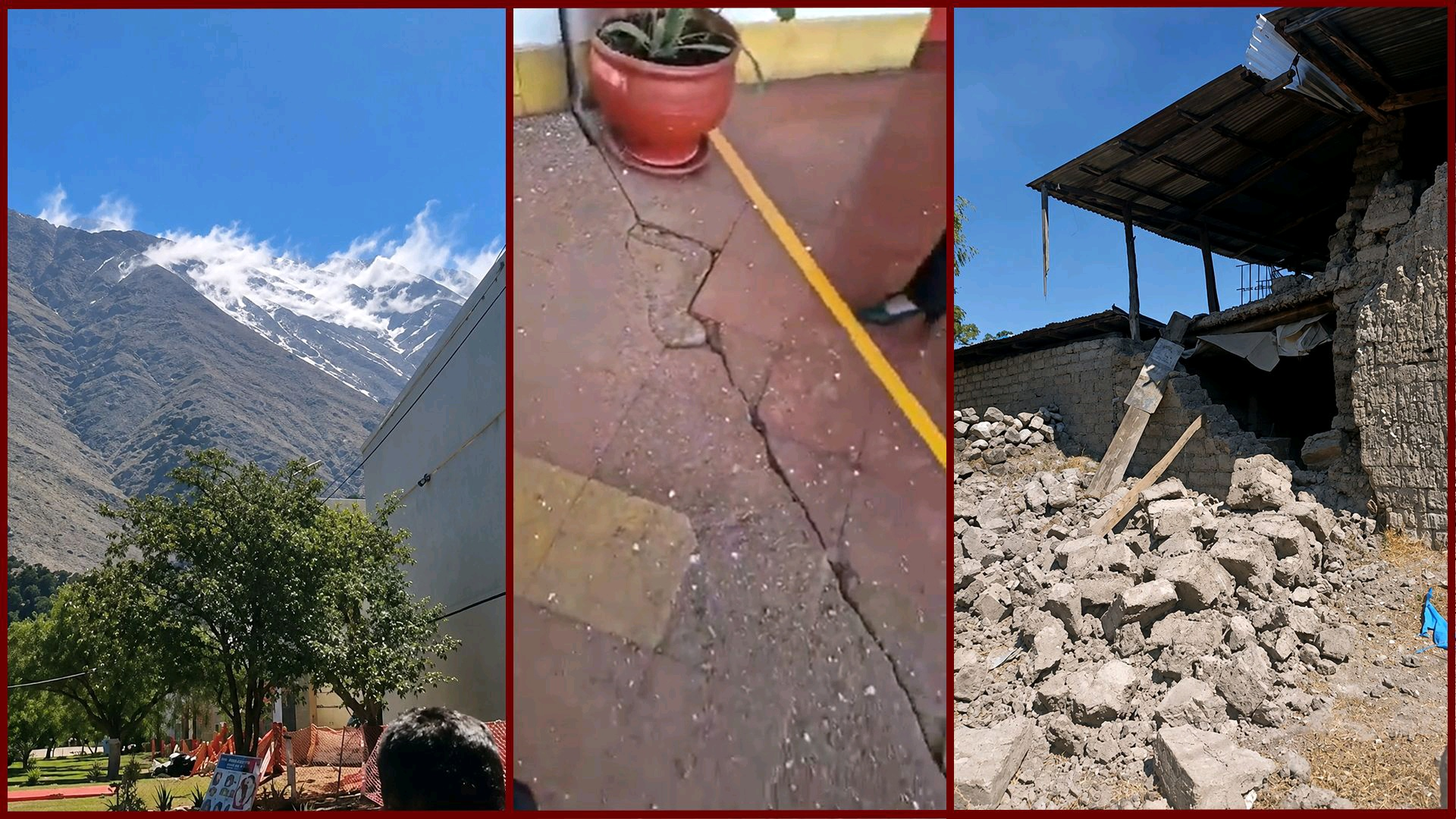
On August 20, a powerful magnitude 7.2 earthquake struck the Ayacucho region of Peru. Its epicenter was located about 22 miles north of the city of Coracora, while the focus was approximately 67 miles deep. The shaking lasted for about a minute and was felt across a large part of southern Peru, from Ica and Arequipa to Apurímac, Cusco, Huancavelica, and Lima.
Among the most noticeable consequences were landslides and rockfalls in mountainous areas. Around Coracora, masses of soil and rocks came down the slopes, disrupting traffic on several roads. One landslide completely blocked a section of the PE-1SI highway, part of Peru’s national road network connecting the provinces of Parinacochas and Lucanas.
As assessments of the affected areas continued, the reported scale of the damage increased significantly. According to Peru’s National Institute of Civil Defense, four hundred ninety-three homes were damaged, another thirty-six were declared uninhabitable, and twelve were completely destroyed. Schools, medical facilities, public buildings, and sections of roads were also damaged.
More than 2, 200 people were affected by the earthquake. Four people were injured, and no deaths were reported. Authorities later declared a sixty-day state of emergency in the five hardest-hit districts of Ayacucho.
Seismic activity continued after the main earthquake. Later that same day, aftershocks with magnitudes of 4.2 and 4.0 were recorded.
On August 23, a magnitude 5.9 earthquake struck Japan, with its focus beneath the southern part of Ibaraki Prefecture, near the city of Toride. Unlike many strong earthquakes in Japan, its epicentral area was not offshore but on land, at a depth of approximately 42 miles.
The maximum seismic intensity reached lower five on the Japanese seismic intensity scale. Strong shaking was felt in Ibaraki, Saitama, Chiba, and Tokyo, and the earthquake was also felt in other parts of eastern Japan.
According to the final reports, forty-five people were injured. In Yokohama, an elderly woman suddenly awakened by the shaking fell out of bed and suffered serious injuries. In Toride, another elderly woman suffered a facial injury after part of the ceiling paneling fell.
No widespread destruction was reported, although there was localized building damage, water leaks, and temporary train suspensions and delays. In Tokyo, people had to be rescued several times from stalled elevators and locked or inaccessible rooms following the earthquake. No serious damage to critical infrastructure or nuclear facilities was identified.
Both earthquakes stood out against the usual level of seismic activity in their respective regions. In southern Ibaraki Prefecture, an earthquake of this magnitude had not occurred for fifteen years. In Peru, despite the country’s high level of seismic activity, earthquakes with magnitudes of around seven or higher remain considerably less frequent.
Events like these are a reminder that even in well-studied, seismically active regions, periods of relative calm can give way to much stronger shaking. And today, against the backdrop of a noticeable increase in seismic activity around the planet, public preparedness, the condition of buildings, and the resilience of infrastructure to events of this kind are becoming especially important.
Publication of this material provides an opportunity for open discussion and does not in itself imply institutional endorsement, confirmation, or scientific verification of the views expressed. The material does not constitute an official statement, expert opinion, or professional advice.