
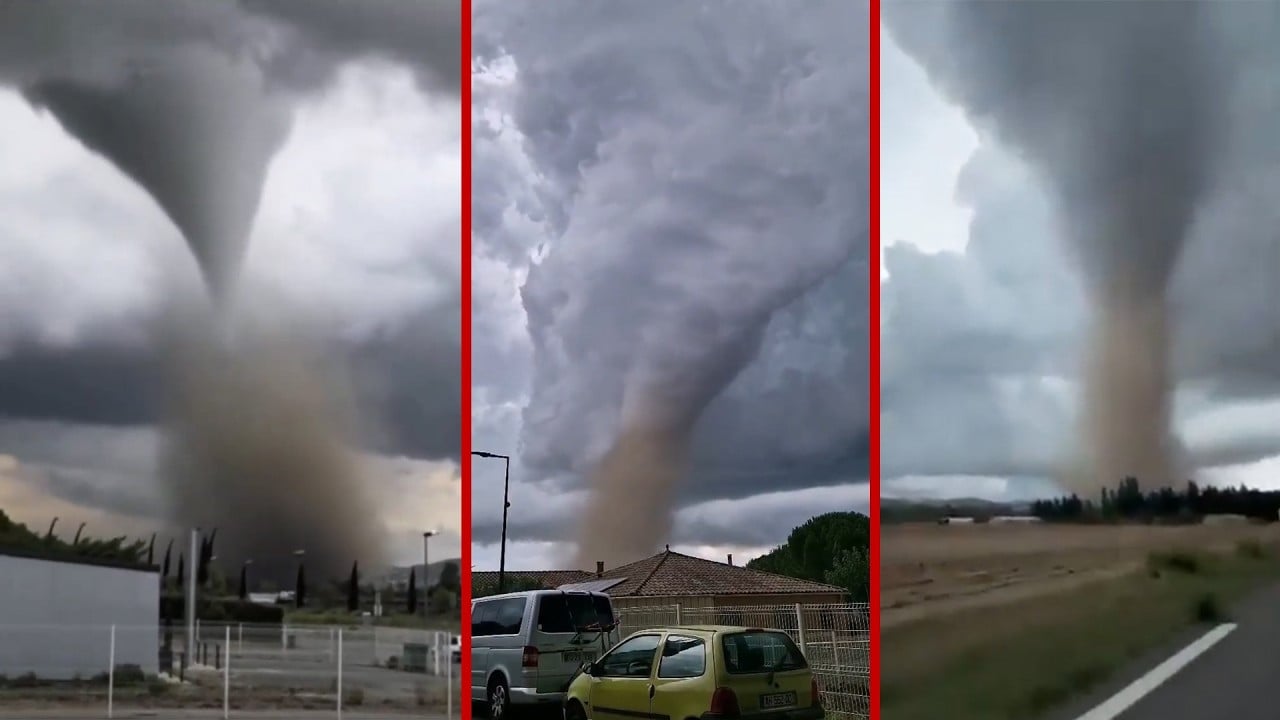
On August 24, southern France was affected by a powerful thunderstorm system. The most serious damage was reported in the commune of Pomas, in the Aude department, where an exceptionally strong tornado developed.
According to an assessment by KERAUNOS, the French Observatory of Tornadoes and Severe Thunderstorms, the tornado was rated EF3, with winds inside the vortex reaching approximately 137 to 149 miles per hour. The tornado traveled for about 3.7 miles and crossed residential areas within just a few minutes.
More than 300 homes were damaged. Around 100 buildings may have been left uninhabitable after the storm. Some houses had their roofs completely torn off, windows were shattered, and in the hardest-hit areas, virtually nothing but the walls remained standing. A school and other municipal buildings also sustained serious damage.
The powerful winds snapped and uprooted large trees, carried sections of building structures through the air, and damaged vehicles. Some roads had to be closed because of fallen debris and wreckage.
The energy infrastructure was also affected. By the evening, around 2,800 households in ten communities across the department remained without electricity.
One of the most remarkable episodes was the rescue of a pregnant woman who became trapped beneath debris after the tornado passed. She remained under the rubble for about an hour and a half before rescuers managed to pull her out alive. A sofa partially protected her from the direct pressure of the collapsed structures.
A total of forty-one people were injured as a result of the severe weather.
The tornado was part of a broader outbreak of severe thunderstorms across southern France. In the Aude department, wind gusts in some areas exceeded 62 miles per hour, while hailstones reached about two inches in diameter. In the Castelnaudary area, more than 1.2 inches of rain fell within a single hour.
Lightning activity was also intense. Over the course of the day, the Météorage network recorded 19,638 cloud-to-ground lightning strikes across France.
Events like this are a reminder that preparedness for natural hazards matters even in places where such threats have long been considered unlikely. Tornadoes are far more commonly associated with the United States, and many people in Europe may find it difficult to imagine themselves facing such a situation. However, as extreme weather events become more intense and affect new areas, it is increasingly necessary to take into account scenarios that until recently seemed typical only of other regions. Understanding basic safety rules and knowing where to find secure shelter is therefore becoming an increasingly practical skill.
Take care of yourselves and your loved ones!
Publication of this material provides an opportunity for open discussion and does not in itself imply institutional endorsement, confirmation, or scientific verification of the views expressed. The material does not constitute an official statement, expert opinion, or professional advice.