
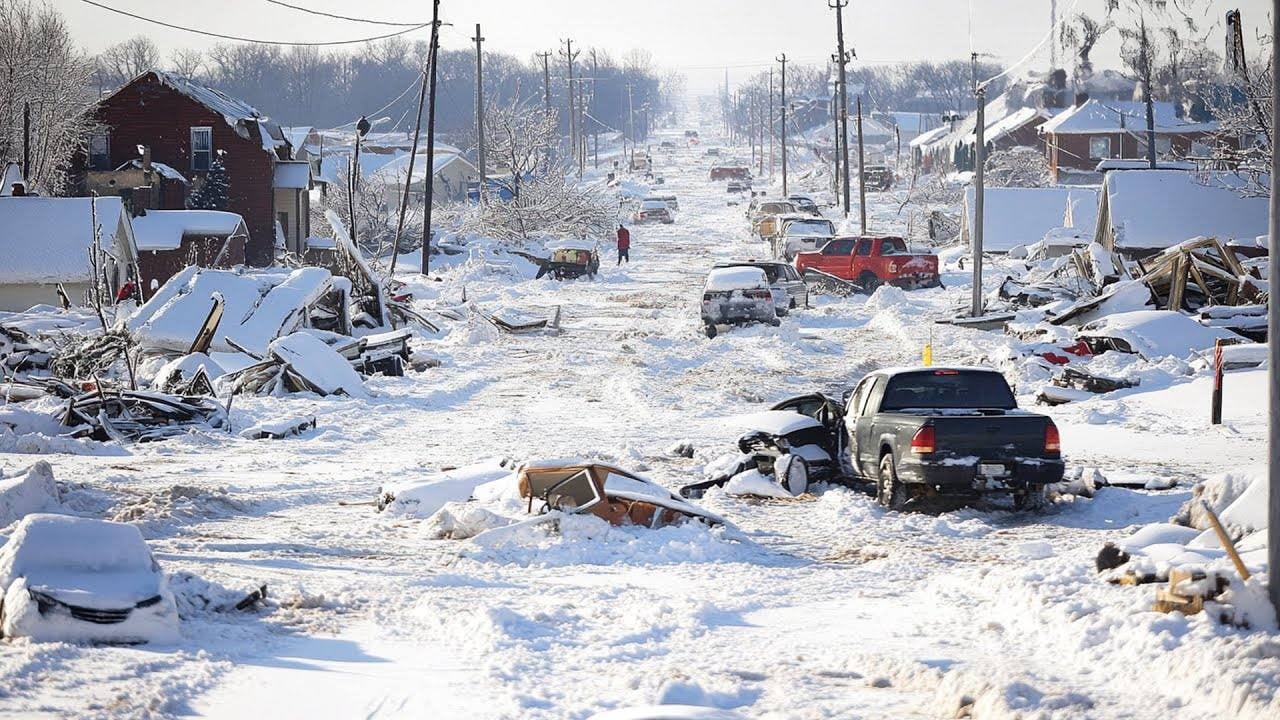
Since January 20, an icy cold has spread across much of the United States. On the Gulf Coast, temperatures, including wind chill, dropped to 10-20°F, while in northern Texas, they fell below 0°F. This triggered a rare winter storm affecting the South and Southeast of the country — from the Gulf Coast to the Atlantic coastline of North Carolina. The sudden cold snap and record snowfall hit regions where such weather events are extremely rare.
Both people and infrastructure were largely unprepared for these conditions.
The U.S. National Weather Service issued a snowstorm warning for parts of Louisiana and Texas for the first time in history.
New Orleans set a daily snowfall record on Tuesday with 8 inches. For a city where snow falls only once a decade, this is an extraordinary rarity. In fact, New Orleans received more snow than Anchorage, Alaska, for the entire month of January.
In Mobile, Alabama, 7.5 inches of snow were recorded, double the 1973 record. The roof of the Mobile Civic Center, a building scheduled for demolition, collapsed under the weight of the snow. Fortunately, no one was injured.
Several areas in Florida broke a 70-year-old state snow accumulation record of 4 inches. In Milton, for example, 10 inches of snow fell.
Airports in Alabama, Texas, Louisiana, Mississippi, and Florida suspended operations, and the problems continued into the next day. In total, over 3,000 flights were canceled across the country in just two days.
Due to the unprecedented snow and ice, many roads in the region became impassable. Around 30 state highways were closed, including the longest bridge in the country over Lake Pontchartrain.
Dangerous road conditions and extreme cold claimed the lives of 11 people.
Publication of this material provides an opportunity for open discussion and does not in itself imply institutional endorsement, confirmation, or scientific verification of the views expressed. The material does not constitute an official statement, expert opinion, or professional advice.