
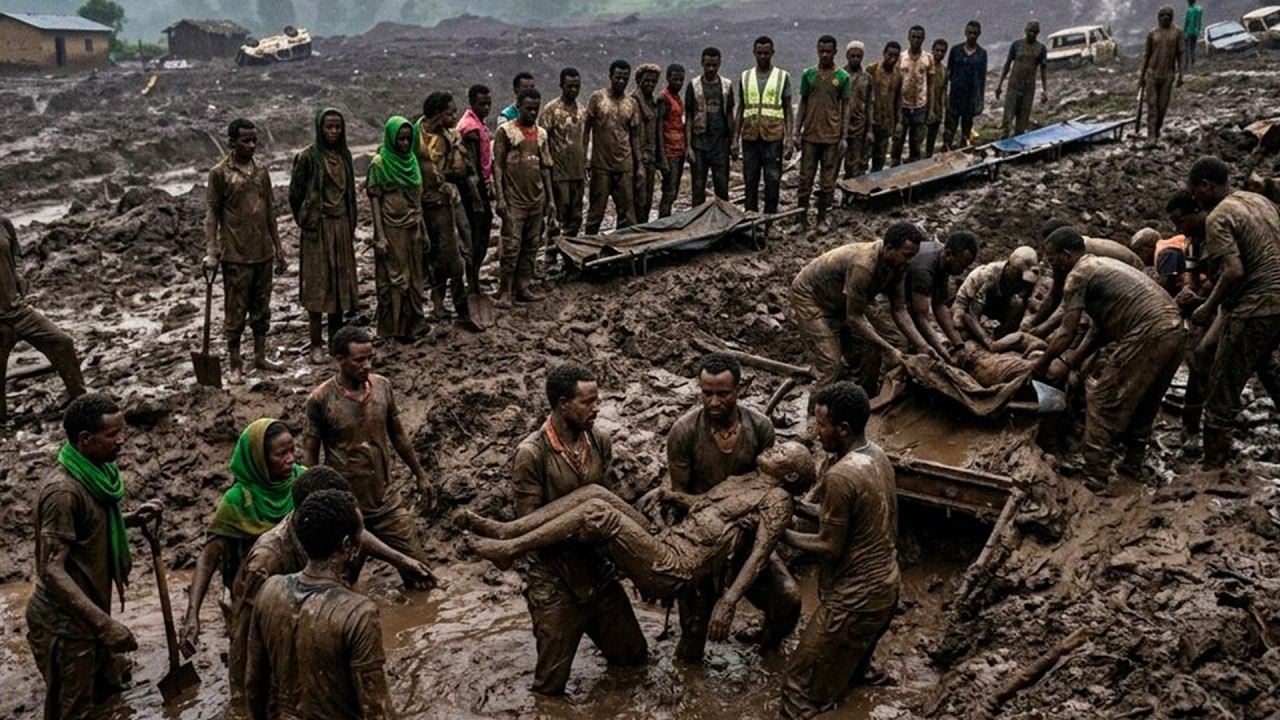
On March 10, after several days of heavy rainfall, destructive floods and landslides struck southern Ethiopia in the Gamo zone. The areas most severely affected were Kamba, Gacho Baba, and Bonke.
Waterlogged mountain slopes collapsed during the night while people were asleep, burying entire villages under thick layers of mud and debris. As a result of the disaster, about one hundred ninety homes were destroyed, bridges were flooded, and major roads were blocked, while vast areas of farmland were wiped out. More than 3,400 people were forced to leave their homes and take shelter in churches and other public buildings.
Continuous heavy rains significantly complicated search and rescue operations. Nevertheless, one person was pulled out alive after spending three days trapped beneath landslide debris.
As of March 14, at least 107 people have been confirmed dead, and dozens remain missing.
Why are disasters like these becoming increasingly large-scale and deadly, even in regions where they have occurred before? Rainfall intensity and the number of landslides are rising, amplifying the destructive impact. What is driving these changes — find out more in the video “Why Is the Ocean Warming Up So Fast.”
Publication of this material provides an opportunity for open discussion and does not in itself imply institutional endorsement, confirmation, or scientific verification of the views expressed. The material does not constitute an official statement, expert opinion, or professional advice.