
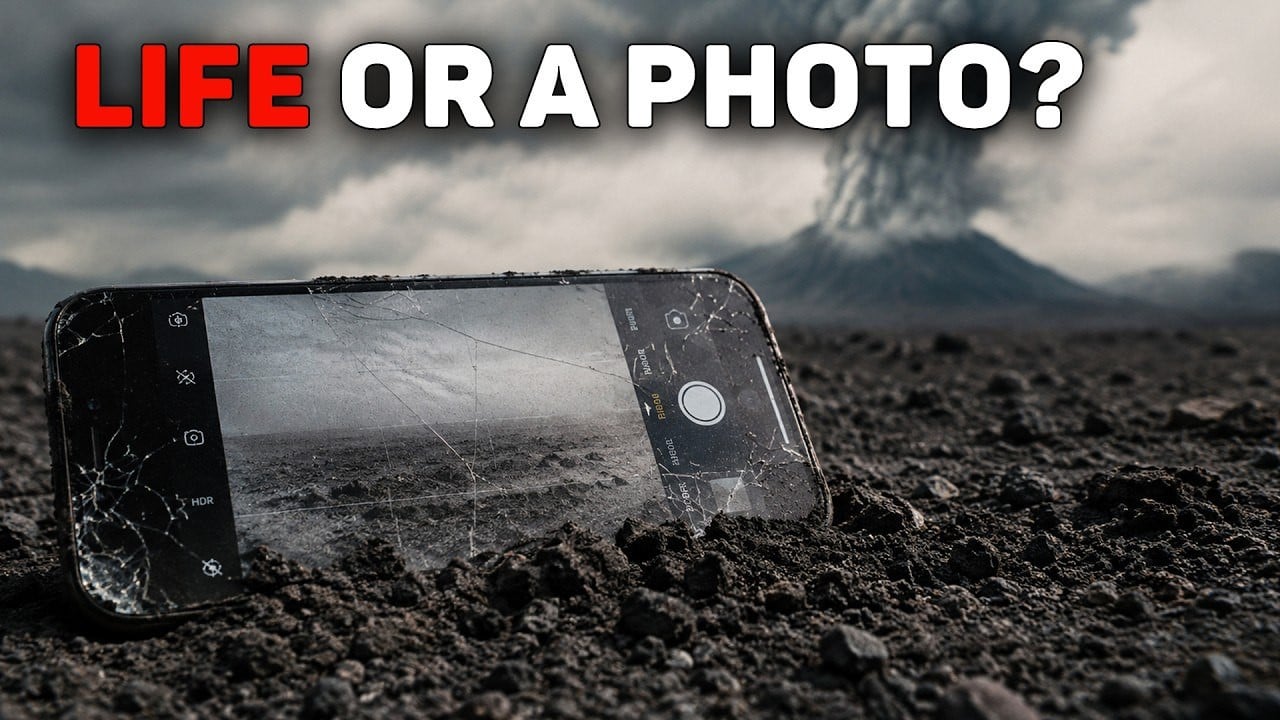
The tragedy in Indonesia became the most widely reported event of the past week: the eruption of Mount Dukono claimed the lives of tourists, despite the area being officially designated as a restricted danger zone. The event clearly demonstrated how quickly familiar tourist routes can turn into traps amid growing global climate and environmental instability.
In the same seven-day period, Turkey faced an unprecedented outbreak of 13 tornadoes, while in Poland fire engulfed centuries-old pine forests.In Japan, weather contrasts reached their peak: in Tokyo heat approached 30°C, while snowfall occurred in May on Hokkaido. The United States recorded tornadoes lifting debris to heights comparable to that of Mount Everest, while Argentina was hit by an extratropical cyclone with record rainfall.
The simultaneity of these anomalies — from tornado outbreaks and wildfires to volcanic activity — is presented as indicative of broader systemic changes in planetary thermoregulation. This is a chronicle of climatic processes and geophysical activity for the period of May 3–10, 2026.
Time codes:
00:00 Introduction
00:27 Turkey: outbreak of 13 tornadoes, anomalous snowfall in May
04:16 Poland: large forest fire in Roztocze National Park (Puszcza Solska region)
06:07 Spain: hailstorms causing damage to agriculture and infrastructure
07:32 Japan: temperature contrasts, snowfall in Hokkaido, strong squall winds
09:20 United States: supercells and tornadoes in Mississippi, debris lofted up to ~8 km
11:20 Argentina: extratropical cyclone, record rainfall, storm surge
13:18 Indonesia: eruption of Mount Dukono, tourist tragedy
15:32 Conclusions: risk perception and the value of life in an era of climate change
Warnings were issued. The route was closed. The danger zone was marked. But a group of tourists still went to the crater — and ended up there at the moment of a powerful eruption. Authorities assume that some of the people may have climbed the volcano for filming content. Such videos gradually form a distorted perception of risk: people underestimate the threat not because the volcano is actually safe, but because only those who successfully climbed, descended, and posted spectacular footage come into view.
The real danger remains and can manifest at any moment — in the form of ejection of incandescent material, dense ashfall, or a sudden explosive eruption. No video, no matter how impressive, is worth a human life.
Understanding the physics of these processes is key to comprehending what is happening. These changes affect everyone, and a scientific approach to studying the planet is becoming a priority task for society.
Watch more materials on our channel about the true causes of escalating climate disasters and their progression based on a mathematical model:
📍 "Nanoplastics. A Threat to Life | Popular Science Film by ALLATRA"
📍 "Why Is the Ocean Warming Up So Fast? | Dr. Egon Cholakian"
Publication of this material provides an opportunity for open discussion and does not in itself imply institutional endorsement, confirmation, or scientific verification of the views expressed. The material does not constitute an official statement, expert opinion, or professional advice.