
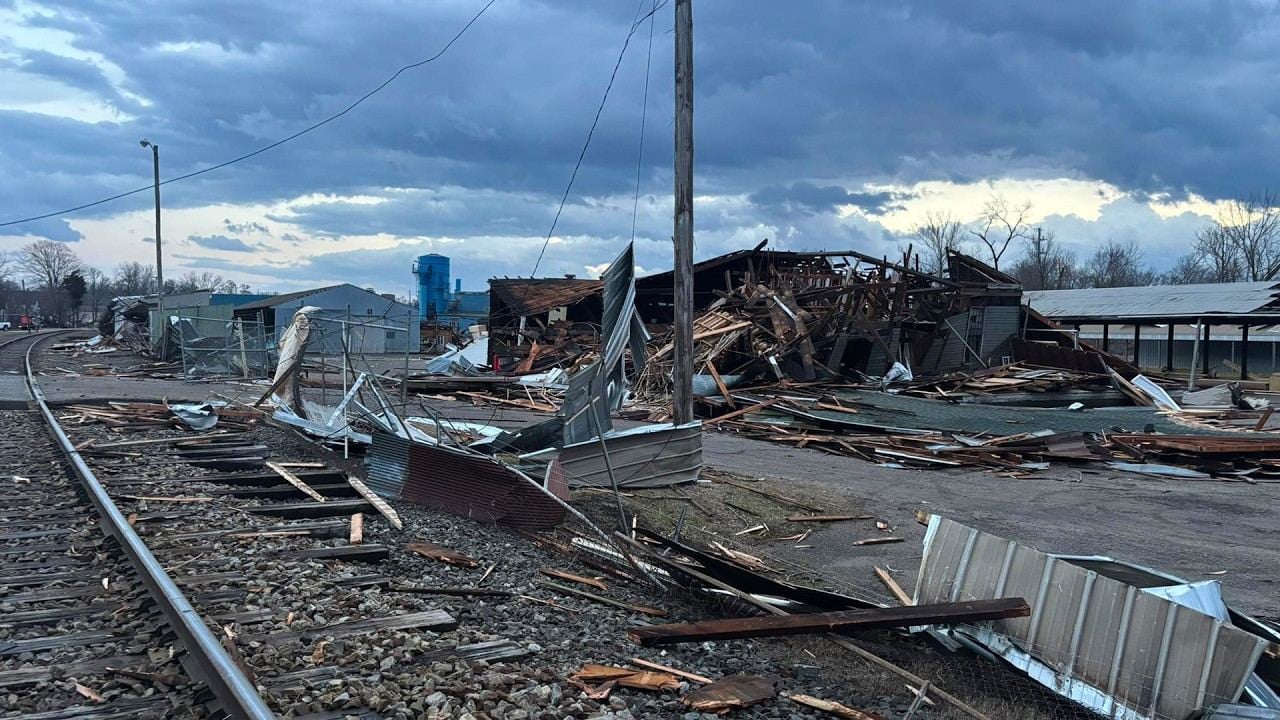
On March 5, a large-scale outbreak of extreme weather began in the central United States. It formed when warm, humid air moving north from the Gulf of Mexico collided with a cold northern front. As a result, a series of destructive events swept across the region — tornadoes, large hail, and hurricane-force winds. The storm system affected twelve states and left more than one hundred thousand people without electricity.
One of the hardest-hit areas was the southwestern part of the state of Michigan — Cass County, St. Joseph County, and Branch County. A powerful EF-3 tornado formed there with wind speeds reaching up to 150 miles per hour. The vortex moved along the shore of Union Lake, tearing up ice, destroying homes and lakeside cottages. Some buildings were completely ripped from their foundations. The tornado lifted a mobile home into the air and threw it about three hundred feet; the resident inside was killed. In total, three people died in the lake area and at least twelve others were injured. As the tornado weakened, it continued moving and passed through the village of Union City, causing additional destruction.
It became the earliest EF-3 or stronger tornado ever recorded in the state of Michigan. The previous record belonged to a tornado of the same category that passed north of the city of Ann Arbor on March 15, 2012.
Another powerful EF-2 tornado struck the village of Three Rivers. Wind gusts there reached about 130 miles per hour. The storm tore roofs from buildings, knocked down trees and power lines, and lifted clouds of debris into the air.
Although the vortex itself raged for only a few minutes, the consequences were severe: recovery from the destruction may take weeks or even months. For more than one mile along West Broadway Street, the roadway was covered with power lines, sheet metal, and shattered glass.
Local businesses and public buildings suffered significant damage, including the local high school. The Menards store, an Applebee’s restaurant, an emergency department facility, and a Holiday Inn Express hotel were all affected.
Despite the scale of the destruction, there were no fatalities in Three Rivers, although ten people were injured. Witnesses say the strike of the storm was sudden: only twenty minutes before the tornado appeared, the sky had been clear and the sun was shining.
In Cass County, another tornado — an EF-1— caused the death of a twelve-year-old boy, and several other people were injured. According to preliminary data, this day became the deadliest in Michigan in terms of tornado victims in the past 46 years. At the same time, only three EF-3 tornadoes have been recorded in the state over the past 26 years.
During the night of March sixth, tornadoes were also recorded in the state of Oklahoma — at least seven vortices.
An EF-3 tornado with wind speeds up to about 145 miles per hour struck the city of Beggs in Okmulgee County. Four houses were completely destroyed, and a married couple was killed in one of them.
In Grant County, another EF-2 tornado knocked down trees, tore down power lines, and damaged buildings.
West of the city of Fairview in Major County, another vortex of the same category pushed a car off U.S. Route Sixty. A woman and her teenage daughter were inside the vehicle; both were killed.
As kinetic energy in the atmosphere increases, phenomena associated with the movement of air masses — tornadoes, hurricanes, and severe storms — are occurring more frequently and with greater intensity.
Interdisciplinary research by scientists of ALLATRA not only documents the intensification of natural disasters but also explains their causes. Their work also presents forecasts for the development of the climate situation and practical measures to counter the climate crisis.
We recommend reviewing one of these reports — it will help provide a better understanding of the processes taking place and increase the level of personal safety.
Publication of this material provides an opportunity for open discussion and does not in itself imply institutional endorsement, confirmation, or scientific verification of the views expressed. The material does not constitute an official statement, expert opinion, or professional advice.