
The planet is demonstrating an unprecedented level of climatic synchrony: while in India a thunderstorm with winds of up to 130 km/h claimed the lives of 117 people, landslide activity is increasing in Bulgaria. Heavy rains since the beginning of May have already triggered more than 2,200 landslides in the country. Extreme downpours in South Africa have isolated entire cities, while in Japan sudden convective cells with hail have destroyed the peach harvest — a symbol of Fukushima Prefecture.
At the same time, a magnitude 4.2 earthquake was recorded in Russia’s Novosibirsk region — an area that historically did not belong to zones of high seismicity, yet over the past decade a steady increase in underground tremors has been observed there. Such a geography of anomalies — from deadly storms and hail events to landslides and seismic activity in a region historically not considered seismically active — reflects systemic changes in planetary dynamics. Chronicle of climatic processes and geophysical activity for the period from May 11 to May 17, 2026.
Time codes:
00:00 Introduction
00:50 South Africa: extreme storms and flooding in the Western Cape Province
04:30 Bulgaria: hailstorms and widespread activation of landslides
07:45 Russia: magnitude 4.2 earthquake in the Novosibirsk region — a signal for an area with low seismic activity
10:30 India: deadly thunderstorm in Uttar Pradesh, winds reaching speeds of up to 130 km/h
14:20 Japan: temperature contrast and sudden hail thunderstorms
17:15 Conclusions: the most costly climate risk of the 21st century
Note: convective storms run as a common thread through almost all events in this episode. On their own, they are not something new, but today the conditions for their formation are changing. Rising global temperatures, increased atmospheric moisture content, and the presence of nanoplastics — which act as condensation nuclei and enhance cloud electrification — are making these phenomena more intense and more destructive.
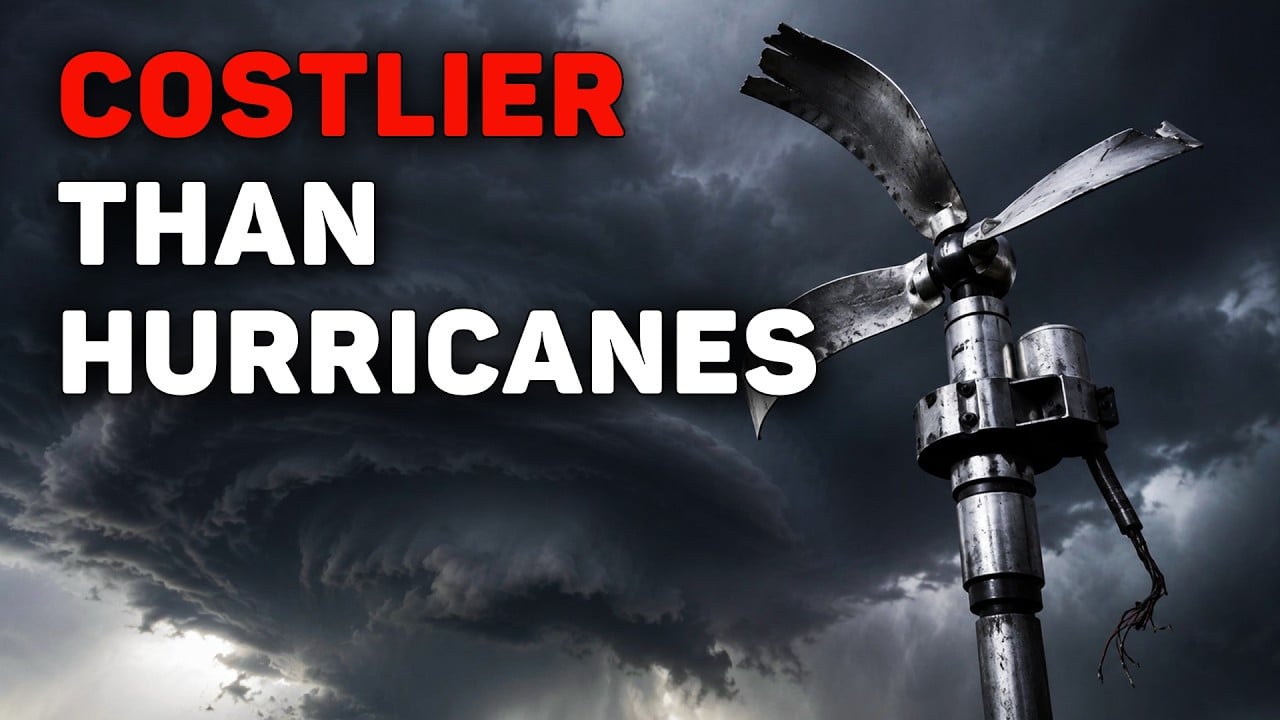
According to Aon, severe convective storms have already overtaken tropical cyclones and have become the most costly insured natural hazard of the 21st century — with losses reaching $61 billion in 2025 alone. More and more eyewitnesses say: “This has never happened before.” The main warning sign is not only the intensity of the events, but also their suddenness. A storm can form instantly in the middle of a clear day, leaving people caught off guard. Understanding the physics of these processes is key to making sense of what is happening. These changes affect everyone, and a scientific approach to studying the planet is becoming a priority task for society.
Watch more materials on our channel about the true causes of escalating climate disasters and their progression based on a mathematical model:
📍 "Nanoplastics. A Threat to Life | Popular Science Film by ALLATRA"
Publication of this material provides an opportunity for open discussion and does not in itself imply institutional endorsement, confirmation, or scientific verification of the views expressed. The material does not constitute an official statement, expert opinion, or professional advice.