
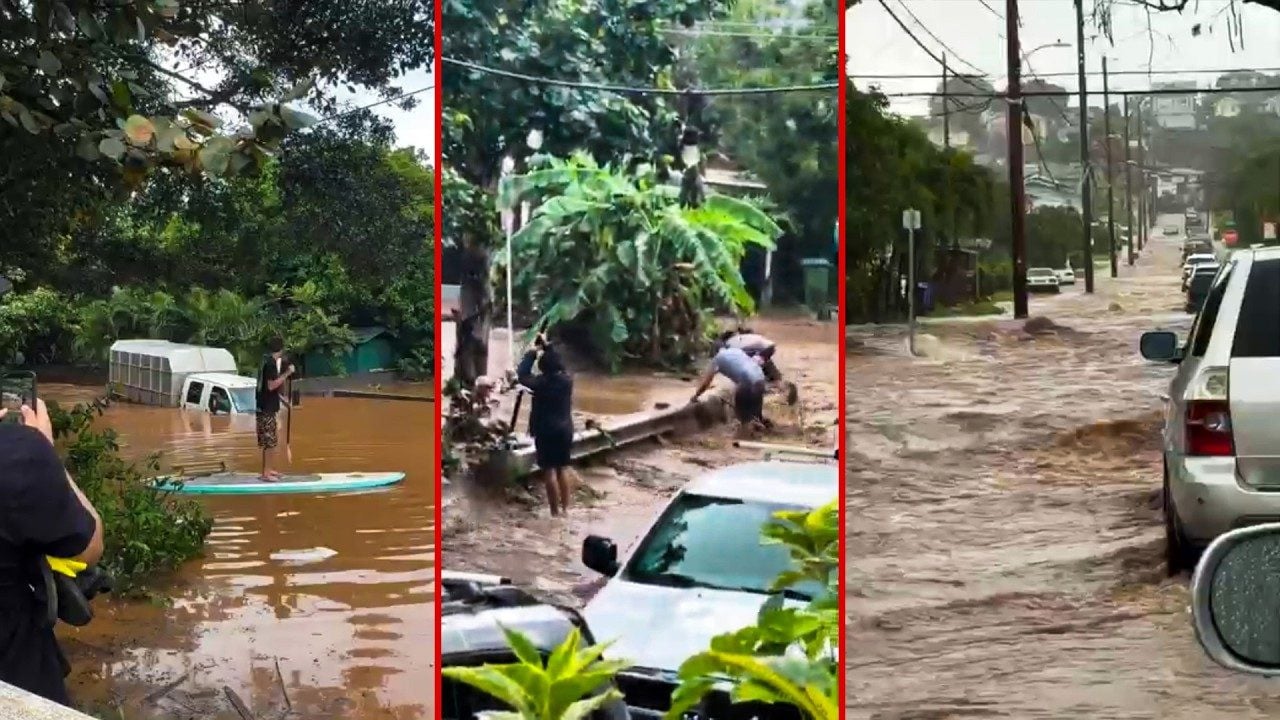
Since March 16, the Hawaiian Islands have been gripped by the most powerful flooding in more than twenty years, which, according to preliminary estimates, has caused damage exceeding one billion dollars.
The cause was a “Kona low” system — a type of cyclone that disrupts stable air circulation and brings prolonged, heavy rainfall.
The islands of Oahu and Maui were hit the hardest. In less than two days, up to nineteen point seven inches of rain fell in some areas onto already saturated ground. Rivers rapidly overflowed their banks, flooding large areas, including residential neighborhoods and tourist zones. In the northern part of Oahu, more than five thousand five hundred people were instructed to urgently evacuate their homes.
The National Guard was deployed for the rescue operation: people were evacuated from rooftops and led out of flooded houses. In total, more than two hundred people were rescued.
On March 20, a state of emergency was declared on the northern coast of Oahu due to the risk of a dam breach.
The disaster caused significant damage: hundreds of residential homes, roads, schools, medical facilities, and other infrastructure were affected.
It is now clear not only to specialists that such powerful atmospheric phenomena are linked to abnormal ocean warming, which in recent years has been accelerating at an especially rapid pace. Moreover, recent studies show that warming is occurring not only at the surface but also in the deep layers near the ocean floor.
What hidden factor is adding heat to the ocean from below, and how this affects natural disasters, was explained in detail by Dr. Egon Cholakian in his video report “Why Is the Ocean Warming Up So Fast?”
Publication of this material provides an opportunity for open discussion and does not in itself imply institutional endorsement, confirmation, or scientific verification of the views expressed. The material does not constitute an official statement, expert opinion, or professional advice.